Article Was Last Updated August 26, 2026
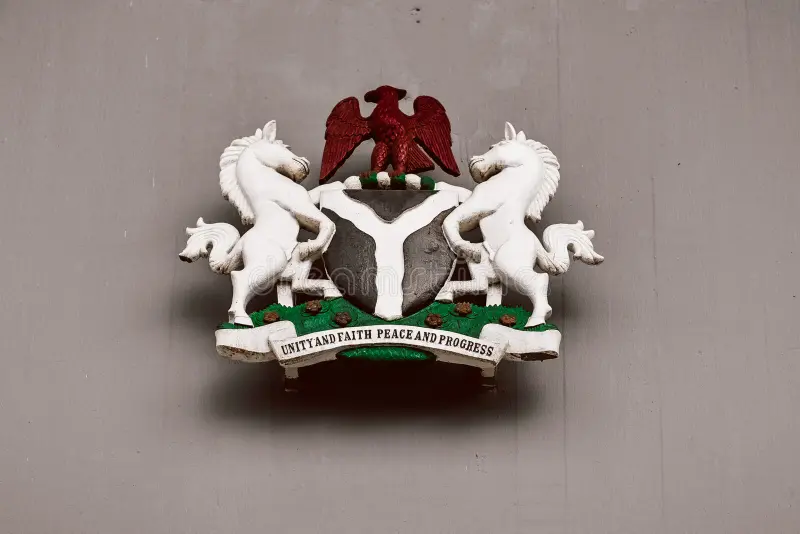
This guide explains the meaning of every symbol on the Nigeria Coat of Arms, explores the history behind its adoption in 1960 and the later revision of the national motto in 1978, and examines why the emblem continues to play an important role in modern Nigeria as a powerful expression of national identity, unity and patriotism.
What Is the Nigeria Coat of Arms?
The Nigeria Coat of Arms serves as the official symbol of the Federal Republic of Nigeria. It represents government authority and national identity. Nigeria adopted it in 1960, just before independence. The government uses it on national documents and official materials.
A coat of arms works as an official symbol that a country or organisation uses to show identity and authority. Governments place it on seals, documents and buildings. This use confirms that a document or institution carries official state approval.
The coat of arms appears on passports, official documents, courts, military uniforms, police badges, embassies and government buildings. It confirms official authority and national identity wherever authorities apply it.
History of the Nigeria Coat of Arms
Before independence, Nigeria used British colonial symbols. This reflected administrative control, not national unity. This colonial background connects closely with wider political and constitutional changes that followed, including events documented in Nigeria’s political evolution, such as the Nigeria Military Coup History.
However, in the 1940s and 1950s, nationalist movements demanded national symbols that reflected Nigeria’s identity and geography.
Nigeria gained independence on 1 October 1960. The country introduced the national flag and Coat of Arms as symbols of the new state.
The Coat of Arms was designed in May 1960 by Beverley Pick Associates in London and launched at independence in October 1960.
Later, the government standardised it in the 1970s, with 1975 widely recognised as the official adoption year.
Since then, the design has remained unchanged and appears on currency, government documents, and official seals.
In addition, Nigerian law protects the Coat of Arms as a national symbol and restricts its use to official government functions.
It appears on government documents, currency, military and police insignia, and judicial and legislative materials.
Nigeria Coat of Arms Meaning Explained
Nigeria Coat of Arms shows the country’s identity through symbols that stand for land, unity, strength, and goals. Each part links directly to the country’s land and values. Together, they form one clear message about national unity and direction.
The Black Shield
The black shield sits in the centre of the Coat of Arms and stands for Nigeria’s fertile soil. It shows the rich farmland that supports farming and business in many parts of the country.
It also stands for strength and resilience. Black was chosen to show the deep, rich soil that supports life and growth. The shield further represents protection, showing a country that protects its land and identity while using its soil as a base for development.
The White “Y” Shape
The white “Y” shape shows where two big rivers meet. It represents the meeting of the River Niger and River Benue at Lokoja, which affects the country’s land and settlements.
This shape also stands for unity. The rivers come together as one, just like different regions and groups come together as one country. In addition, the white colour stands for peace and shows people working together in harmony.
The Two White Horses
The two white horses stand on both sides of the shield. They stand for dignity, strength, and loyalty. They also show balance and stability in the country.
The two white horses also represent pride and service to the nation. The white colour represents purity and honesty, while their position indicates protection around the shield.
The Red Eagle
The red eagle sits at the top of the Coat of Arms. It stands for strength, power, and courage. The red eagle also shows leadership and the ability to overcome problems.
It further stands for authority and national strength. The red colour shows energy and sacrifice, while its position at the top shows leadership and control.
The Green and White Wreath
The green-and-white wreath surrounds the bottom of the shield. It stands for Nigeria’s farming wealth and links to the national colours.
Green stands for farming, growth, and wealth. White stands for peace and unity. Combined, they show hope for growth and better development. As a result, the wreath shows the link between nature and national progress.
The Flowers at the Base
The base shows Costus spectabilis, Nigeria’s national flower. It stands for beauty, strength, and nature.
This flower grows in many parts of the country, so it shows shared identity. It also shows that the nation is rooted in nature and grows from the land across all seasons.
The Motto
The motto is: “Unity and Faith, Peace and Progress” and it shows the main values of the country.
Unity means people should work together. Faith means trust in the country and its future. Peace means living without conflict and with harmony. Progress means growth and development in the country.
Earlier, Nigeria used different national messages after independence. However, the current motto was adopted in 1978 to bring people together under one message. In the end, it still guides the country’s goals for unity, peace, and growth.
Why the Nigeria Coat of Arms Is Important
The Nigeria Coat of Arms represents the country in official, school, and international settings. The black shield stands for fertile land, while the white “Y” shows the River Niger and River Benue. These symbols connect Nigerians to their land and shared history. Therefore, it helps people see the country as one united nation.
It also supports patriotism. The motto, “Unity and Faith, Peace and Progress,” encourages people to work together and stay loyal to the country. In addition, it builds pride in national identity. The emblem shows government authority because it appears on official documents, money, and state communication. As a result, it confirms authenticity and builds trust in government records.
The Coat of Arms also promotes cultural unity. The horses show dignity, while the eagle shows strength. Furthermore, it supports civic education by teaching students about values, citizenship, and responsibility. At international events, it represents Nigeria and confirms its sovereignty.
Nigeria Coat of Arms vs Nigerian Flag
| Feature | Coat of Arms | National Flag |
| Purpose | Serves as the official state emblem representing government authority, national identity, and sovereignty. It appears on official documents, seals, and currency. | Serves as the national identity symbol representing the nation and its people. It is flown during public, civic, and national events. |
| Colours | Black, white, green, red (eagle), yellow (flowers) | Green and white only |
| Symbolism | Black shield = fertile soil; white “Y” = Rivers Niger & Benue; horses = dignity; eagle = strength; yellow flower = national flower; green/white = agriculture and unity; motto = national ideals | Green = agriculture and natural wealth; white = peace and unity |
| Official use | Used by the Presidency, courts, government ministries, military insignia, passports, naira notes, and diplomatic seals | Used in national ceremonies, schools, government buildings, sports events, and international representation |
| Legal status | Protected under Nigerian law as a state symbol; misuse is restricted and punishable | Protected national flag under official flag legislation; regulated use for respect and protocol |
| Where each is displayed | Government offices, court buildings, presidential documents, currency, official state communications | Public buildings, schools, embassies, national holidays, sporting events, ships, and public institutions |
Common Misconceptions About the Nigeria Coat of Arms
The Nigeria Coat of Arms is often misunderstood because people confuse it with other national symbols or wrongly interpret its elements.
Confusing It With The National Flag
First, the Coat of Arms differs from the national flag in purpose and meaning. The flag represents peace and farming through its green-white-green colours. The Coat of Arms serves as an official national symbol used on government documents and stamps. It also brings together symbols that represent government, unity, and national identity.
Incorrect Meanings Assigned To The Horses And Eagle
Second, the white horses are often wrongly linked to war or colonial history. In official meaning, they represent dignity. The red eagle is sometimes misinterpreted as a religious or regional symbol, but it represents strength and national power in the Coat of Arms design.
Misunderstanding The White “Y”
Finally, the white “Y” shape shows where the River Niger and River Benue meet at Lokoja. It marks the confluence of two major rivers and highlights an important part of Nigeria’s geography and history.
Believing Every Government Logo Is The Coat Of Arms
In addition, not all government logos represent the Coat of Arms. It is the official national symbol, while ministries and agencies use separate logos. Only some official state seals include the Coat of Arms.