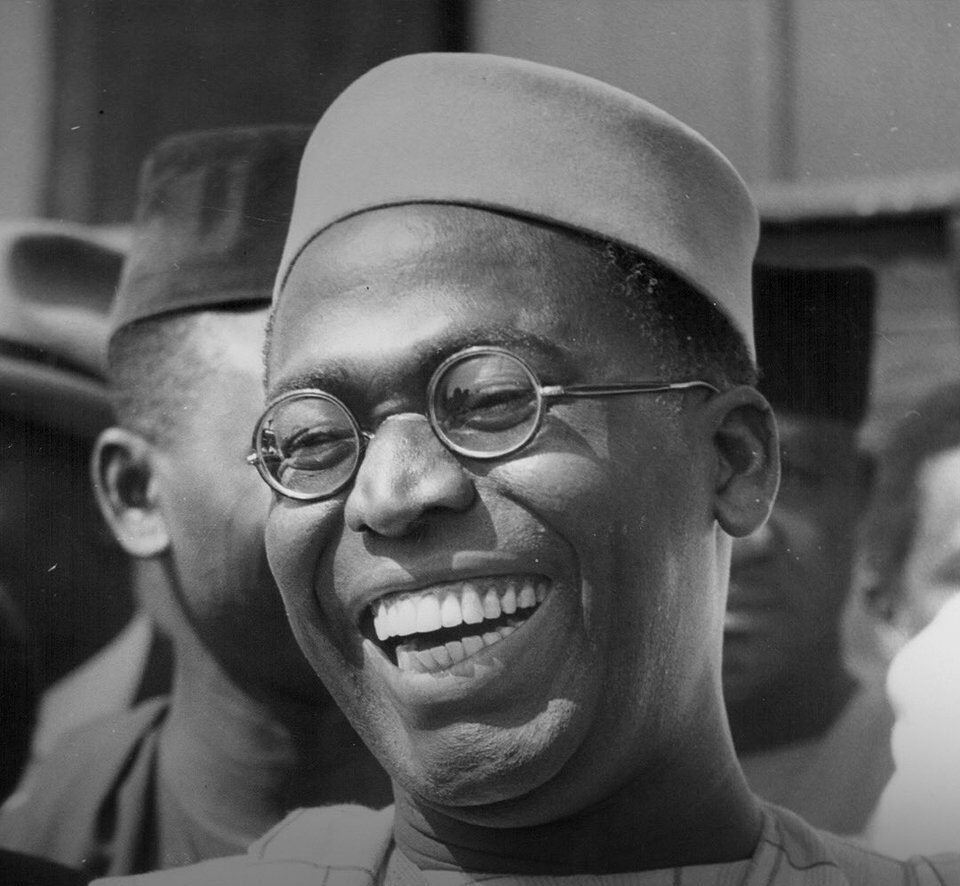
Article Was Last Updated August 26, 2026
This article examines Chief Obafemi Awolowo biography, family background, wife and children, political career, ideology, personal life, death, and lasting legacy, drawing on historical records and up-to-date biographical sources all over.
Who Is Obafemi Awolowo?
Obafemi Awolowo was a Nigerian lawyer, journalist, and politician. He was one of the leaders who helped build modern Nigeria. He wanted Nigeria to be free from British rule and believed Nigerians should lead their own country. His ideas still influence Nigeria today.
Meaning of His Identity in Nigerian History
Awolowo was an important leader in Nigeria’s history. He worked for Nigeria’s independence and believed every region should have a voice in government. Because of this, many people see him as one of the country’s greatest leaders.
Role as a Statesman and Nationalist
Awolowo started the Action Group political party in 1950. He became Premier of the Western Region and brought free primary education to many children. He also improved healthcare, built roads, and supported farming. As a result, the Western Region made fast progress under his leadership.
Political Importance and First Republic Influence
During Nigeria’s First Republic, Awolowo was the main opposition leader. He spoke about good leadership, better education, and a strong economy. Meanwhile, his ideas helped shape many government policies and political debates across the country.
Was He a President?
Awolowo was never President of Nigeria. He ran for president in 1979 and 1983 but lost both elections. Even so, many Nigerians remember him for his good ideas, strong leadership, and the changes he brought to the country.
Obafemi Awolowo Early Life and Background
Obafemi Awolowo Parents
Chief Obafemi Awolowo was the son of David Shopolu (also spelt Sopolu) Awolowo and Mary Efunyela Awolowo.
His father worked as a farmer and sawyer. He was one of the first Christians in Ikenne before he died of smallpox in 1920.
Meanwhile, his mother raised the family and supported Awolowo’s education despite financial hardship. To pay for school, he worked as a teacher, clerk, journalist, and trader.
Obafemi Awolowo Born (Year And Place)
Obafemi Awolowo was born as Jeremiah Obafemi Oyeniyi Awolowo on 6 March 1909 in Ikenne, Remo, in Southern Nigeria under British rule. Today, Ikenne is in Ogun State, Nigeria.
Obafemi Awolowo Education
Primary and Secondary Education
Obafemi Awolowo’s father died when he was about 10 years old, leaving the family in financial hardship. As a result, he combined school with work to support himself.
Awolowo started his education at St. Saviour’s School in Ikenne. Because his family had little money, he attended different schools while doing small jobs to pay for his education. He later gained admission to Wesley College, Ibadan, one of the leading teacher-training colleges in colonial Nigeria.
He graduated from Wesley College in 1927 with a teaching certificate. Teaching gave him a steady income, while he also worked as a clerk, trader, journalist and transport operator to fund his future studies. Consequently, these jobs helped him build practical skills and understand the challenges many Nigerians faced.
Higher Education Journey
Awolowo continued his education while working full-time. He earned a Bachelor of Commerce degree through the University of London’s external programme, which allowed him to study from Nigeria.
He also built his knowledge through journalism. Awolowo worked as the editor of the Nigerian Worker and later founded the Nigerian Tribune. Through these roles, he wrote about politics, the economy and constitutional issues.
In 1944, after years of saving money, Awolowo travelled to London to study law with support from his wife, Hannah Awolowo. Meanwhile, he also studied British politics and constitutional law.
Legal Training and Qualification as a Lawyer
In London, Awolowo studied law at the University of London and trained at the Inner Temple, one of the four Inns of Court that prepare barristers in England and Wales.
He also studied constitutional law, public administration, political philosophy and federal systems of government. These subjects gave him a strong understanding of how governments work.
In 1946, he qualified as a barrister after the Inner Temple called him to the English Bar. He returned to Nigeria in 1947 and opened a law practice in Ibadan.
Soon after returning home, he published his book, Path to Nigerian Freedom. In it, he explained his ideas on federalism, constitutional reform and self-government, which later shaped his political career.
Obafemi Awolowo Political Career
Entry Into Politics
Obafemi Awolowo began his political career in the 1930s through trade union activities, journalism and nationalist campaigns. Before entering politics full-time, he worked as a teacher, clerk, trader, journalist and lawyer. These jobs helped him understand the social and economic problems facing Nigerians under British colonial rule.
He joined the Nigerian Youth Movement, one of the leading nationalist organisations at the time. As Western Provincial Secretary, he called for constitutional reforms, greater African representation and stronger regional participation in government.
Between 1944 and 1947, Awolowo studied law in London. During this period, he founded Egbe Omo Oduduwa, a Yoruba cultural and political group. He also wrote Path to Nigerian Freedom, which argued that Nigeria should adopt a federal system with strong regional governments.
Action Group Formation
In 1951, Awolowo founded the Action Group, one of Nigeria’s major political parties before independence. Although the party had strong support in Western Nigeria, it aimed to build a national political movement.
The Action Group focused on policies that would improve people’s lives. Its main goals included:
- Free primary education.
- Better healthcare.
- Modern farming.
- Improved roads and public services.
- A federal system of government.
- Early self-government for Nigeria.
The party won the 1951 elections in the Western Region. As a result, Awolowo introduced many of the reforms he had promised.
Leadership in Western Nigeria
Awolowo became Premier of the Western Region in 1954 and led the region until 1959. His government introduced several reforms that changed education, healthcare and public services.
His administration launched:
- Free universal primary education.
- Free healthcare for children.
- Better roads and rural development.
- Support for agriculture.
- Public housing projects.
- Western Nigeria Television, Africa’s first television station.
Free education became his most successful programme because it increased school enrolment and improved literacy across the region.
Awolowo also strengthened local government and believed each region should have enough power to manage its own affairs.
Role In Nigeria’s Independence Movement
Awolowo played an important role in Nigeria’s journey to independence. He took part in constitutional discussions with British officials and other Nigerian leaders.
He strongly supported federalism because he believed it would help Nigeria’s different ethnic groups live together peacefully. Awolowo argued that regional governments should have enough authority to manage local affairs.
After the 1959 federal election, the Action Group became the main opposition party. Awolowo served as Leader of the Opposition in the Federal House of Representatives when Nigeria gained independence on 1 October 1960.
Imprisonment And Political Struggles
In the early 1960s, disagreements within the Action Group weakened the party.
In 1963, a court found Awolowo guilty of treasonable felony after the government accused him of plotting to overthrow the federal government. The court sentenced him to ten years in prison. Many historians still debate whether political reasons influenced the trial.
He remained in prison until 1966, when the new military government released him after the first military coup.
Return To National Politics
After his release, Awolowo joined General Yakubu Gowon’s military government. He served as Federal Commissioner for Finance and Vice-Chairman of the Federal Executive Council during the Nigerian Civil War.
When Nigeria prepared to return to civilian rule, he founded the Unity Party of Nigeria. The party promoted free education, free healthcare, rural development and job creation.
Awolowo ran for president in 1979 and again in 1983, but he lost both elections to Shehu Shagari. Even so, his ideas on education, federalism and good governance continue to influence Nigerian politics today.
Obafemi Awolowo Free Education Policy
Obafemi Awolowo introduced free primary education in the Western Region on 17 January 1955. The policy gave every child access to free primary education, regardless of family income.
Before the policy, many families could not afford school fees. The government removed the fees, built more schools, and trained more teachers. It invested heavily in education to support the programme.
As a result, more children attended school. Literacy rates improved as more people learned to read, write, and do basic mathematics. Children from poor families also gained access to education.
The policy helped produce more teachers, doctors, lawyers, engineers, and other skilled workers. It also influenced later education programmes, including the Universal Primary Education (UPE) programme in 1976 and the Universal Basic Education (UBE) programme.
Today, many people consider Awolowo’s free education policy one of Nigeria’s most important education reforms because it expanded access to education and improved literacy.
Obafemi Awolowo Achievements and Contributions to Nigeria
Infrastructure Development
- Built new roads.
- Improved rural roads.
- Started Africa’s first television station.
- Built public buildings.
- Expanded water supply.
- Built hospitals.
- Supported farming projects.
Education Reforms
- Introduced free primary education.
- Removed school fees.
- Built more schools.
- Trained more teachers.
- Increased school enrolment.
- Used television for education.
- Improved literacy.
Economic Planning
- Used cocoa revenue to fund public projects.
- Managed public money well.
- Supported farming.
- Encouraged local industries.
- Planned for long-term growth.
- Kept the economy stable during the Civil War.
National Unity Efforts
- Supported federalism.
- Promoted equal development.
- Protected minority rights.
- Encouraged national unity.
- Supported constitutional reform.
- Promoted democracy.
Legacy in Governance Systems
- Improved education and healthcare.
- Encouraged good governance.
- Promoted accountability.
- Influenced later government policies.
- Shaped Nigeria’s federal system.
- Left a lasting legacy.
Obafemi Awolowo Family Life
Many of Awolowo’s children and grandchildren became lawyers, diplomats, business leaders, politicians and media personalities. The Awolowo family remains one of Nigeria’s most well-known political families.
Obafemi Awolowo Wife
Obafemi Awolowo married Hannah Idowu Dideolu Awolowo, popularly called HID Awolowo, on 26 December 1937.
HID Awolowo was a successful businesswoman and a strong supporter of her husband’s political career. She also managed the family’s businesses and helped preserve his legacy after he died in 1987.
She remained active in public life until she died in 2015.
Obafemi Awolowo Children
Chief Obafemi and HID Awolowo had five children.
| Child | What to Note |
| Olusegun Awolowo (1938–1963) | Died in a road accident at a young age. His son, Segun Awolowo, later became a prominent lawyer and trade promotion executive. |
| Omotola Oyediran (1940–2020) | Married academic and diplomat Kayode Oyediran. |
| Oluwole Awolowo (1942–2013) | Businessman and former chairman of African Newspapers Limited. Father of reality TV personality Seyi Awolowo. |
| Ayodele Soyode (1944–2011) | Mother of Dolapo Osinbajo. |
| Tokunbo Awolowo-Dosunmu (born 1948) | Former Nigerian Ambassador to the Netherlands and former Director-General of the Nigerian Tourism Development Corporation. |
Obafemi Awolowo Grandchildren
Several of Awolowo’s grandchildren have built successful careers.
Segun Awolowo
- Lawyer
- Former Executive Director of the Nigerian Export Promotion Council (NEPC)
- Former President of the ECOWAS Trade Promotion Organisations
Dolapo Osinbajo
- Lawyer
- Wife of former Nigerian Vice President Yemi Osinbajo
- Served as Nigeria’s Second Lady from 2015 to 2023
Seyi Awolowo
- Entrepreneur
- Television personality
- Actor
- Businessman
- Former Big Brother Naija finalist
Many other grandchildren work in business, law, education and public service.
Is Seyi Awolowo related to Obafemi Awolowo?
Yes. Seyi Awolowo is the grandson of Chief Obafemi Awolowo.
His family line is:
Chief Obafemi Awolowo
- Oluwole Awolowo (third child)
- Seyi Awolowo
Obafemi Awolowo Businesses and Net Worth
Obafemi Awolowo’s legal work gave him steady income, but it did not make him rich because he soon moved into politics.
From 1954 to 1960, he served as Premier of the Western Region. During this period, he earned a low government salary and did not build personal wealth from office. Instead, he directed public funds toward regional development.
Later, from 1967 to 1971, he worked as Federal Commissioner for Finance.
In addition, he wrote important books that influenced political thinking in Nigeria, but they brought limited income.
Modern estimates place his wealth at about $850,000, based on family property holdings in Ikenne, association with the Nigerian Tribune, and posthumous valuation of intellectual property and historical royalties.
Obafemi Awolowo Age at Death and Cause
Obafemi Awolowo died on 9 May 1987 at the age of 78. He had already turned 78 in March that year. Reports link his death to old age, with no specific disease recorded. At that stage, his body weakened and his organs slowed down.
In the end, he died peacefully at his home in Ikenne, Ogun State. His death ended an important era in Nigerian politics, but his work in education and governance still shapes the country today.