Article Was Last Updated August 25, 2026
The largest oil refineries in the world in 2026 are Jamnagar Refinery, Paraguaná Refinery Complex, Ruwais Refinery, Ulsan Refinery Complex and Dangote Petroleum Refinery, ranked by crude oil processing capacity.
These refineries process between 630,000 and 1.4 million barrels of crude oil per day, producing petrol, diesel, jet fuel and petrochemical products for domestic and global markets.
Top 10 Largest Oil Refineries in the World by Capacity (2026)
This ranking is based on installed crude oil processing capacity, measured in barrels per day (bpd). It highlights the world’s biggest oil refineries and the facilities that play a leading role in global fuel supply, energy security and petroleum exports. It also has a direct impact on foreign exchange pressure and fuel pricing, particularly in economies affected by currency volatility such as Nigeria.
These are the world’s 10 largest oil refineries by crude oil processing capacity in 2026.
10. Beaumont Refinery – ExxonMobil
Location: Beaumont, Texas, United States
Processing capacity: More than 630,000 barrels per day
ExxonMobil owns the Beaumont Refinery, one of the biggest oil refineries in the United States. The site covers about 2,700 acres and includes an oil refinery, chemical plants and lubricant production.
The refinery has been operating for more than 100 years. Several upgrades have increased its capacity to more than 630,000 barrels of crude oil a day.
Beaumont produces petrol, diesel, jet fuel, chemicals, lubricant base oils and other industrial products. More than 2,000 people work at the site.
9. Galveston Bay Refinery – Marathon Petroleum
Location: Texas City, Texas, United States
Processing capacity: About 631,000 barrels per day
Marathon Petroleum owns the Galveston Bay Refinery, one of the biggest oil refineries in North America. In 2018, the company made the refinery bigger by combining it with the former Texas City refinery.
Today, the refinery processes about 631,000 barrels of crude oil every day. It produces petrol, diesel, liquefied petroleum gas (LPG), propane, heavy fuel oil and raw materials used to make chemicals.
The refinery is on the Houston Ship Channel, giving it easy access to pipelines, ports, rail lines and roads. It also has its own power plant, which provides most of the energy needed to run the site.
8. Dangote Petroleum Refinery – Dangote Industries Limited
Location: Lekki Free Zone, Lagos, Nigeria
Processing capacity: 650,000 barrels per day
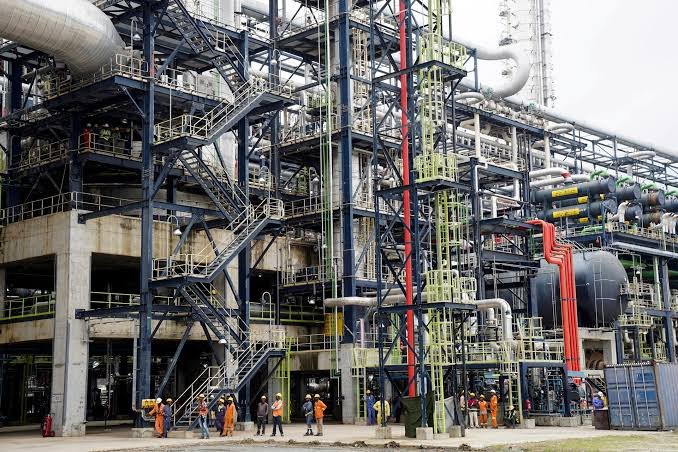
The Dangote Petroleum Refinery is the largest refinery in Africa and the world’s largest single-train refinery. It is in the Lekki Free Zone in Lagos. The project is owned by Nigerian industrialist Aliko Dangote, whose business empire spans cement, sugar, and major energy investments.
The site has a deep-sea port, a power plant and petrochemical facilities. These help the refinery work more efficiently. Shipping infrastructure and maritime logistics play a key role in supporting crude import and petroleum export operations across major industrial zones.
Dangote produces petrol, diesel, jet fuel, kerosene and other petroleum products for Nigeria and other countries.
Since commercial operations began, the refinery has reduced Nigeria’s fuel imports. It has also increased exports of refined petroleum products and improved fuel supply across West Africa.
There are regulatory framework put in place by federal authorities and key government ministries responsible for petroleum policy and downstream operations
7. Onsan Refinery – S-OIL Corporation
Location: Ulsan, South Korea
Processing capacity: About 669,000 barrels per day
S-OIL owns the Onsan Refinery, one of the largest oil refineries in Asia. The refinery opened in 1980 and has grown from 90,000 barrels a day to about 669,000 barrels a day.
Onsan makes petrol, diesel, jet fuel, marine fuel, liquefied petroleum gas (LPG) and petrochemical feedstocks. It also produces raw materials used to make plastics and other everyday products.
Its modern equipment helps the refinery produce cleaner fuels. The site also exports fuel and chemical products to many countries.
6. Port Arthur Refinery – Motiva Enterprises
Location: Port Arthur, Texas, United States
Processing capacity: About 730,000 barrels per day
Motiva Enterprises owns the Port Arthur Refinery, the largest oil refinery in North America. The company opened the refinery in 1903 and has expanded it into one of the world’s biggest refining sites.
Today, the refinery processes about 730,000 barrels of crude oil each day. It produces petrol, diesel, jet fuel, marine fuel and other petroleum products.
The site has the largest base oil plant in the Western Hemisphere. It produces about 40,000 barrels of base oils every day for engine oils and industrial lubricants.
Its Gulf Coast location gives the refinery direct access to ports, pipelines and storage facilities, helping it supply both local and international markets.
5. Yeosu Refinery Complex – GS Caltex
Location: Yeosu, South Jeolla Province, South Korea
Processing capacity: About 800,000 barrels per day
GS Caltex owns the Yeosu Refinery Complex, one of the world’s largest oil refineries. It processes about 800,000 barrels of crude oil every day.
The refinery makes petrol, diesel, jet fuel, marine fuel and petrochemical feedstocks. Modern equipment helps turn heavy fuel oil into more valuable products.
Yeosu also produces materials used to make plastics, synthetic fibres and many everyday goods. Its deep-water port makes it easy to import crude oil and export refined products around the world.
4. Ulsan Refinery Complex – SK Energy
Location: Ulsan, South Korea
Processing capacity: About 840,000 barrels per day
SK Energy owns the Ulsan Refinery Complex, one of the world’s largest oil refineries. The company opened the refinery in 1962. Today, it processes about 840,000 barrels of crude oil every day.
The refinery produces petrol, diesel, jet fuel, marine fuel, liquefied petroleum gas (LPG), naphtha and raw materials for the petrochemical industry. SK Energy regularly upgrades the site to improve efficiency and produce cleaner fuels.
Ulsan supplies fuel across South Korea and exports refined petroleum products to many countries.
3. Ruwais Refinery – ADNOC Refining
Location: Ruwais, Abu Dhabi, United Arab Emirates
Processing capacity: More than 920,000 barrels per day
ADNOC Refining operates the Ruwais Refinery, the largest oil refinery in the Middle East. The site is about 245 kilometres west of Abu Dhabi and has easy access to international shipping routes.
The refinery processes more than 920,000 barrels of crude oil each day. It produces petrol, diesel, jet fuel, liquefied petroleum gas (LPG), naphtha, base oils and other petroleum products.
Ruwais is part of a large industrial area with petrochemical plants, storage tanks and export terminals. This helps improve production and support the UAE’s oil industry.
2. Paraguaná Refinery Complex – PDVSA
Location: Falcón State, Venezuela
Processing capacity: About 955,000–971,000 barrels per day
PDVSA operates the Paraguaná Refinery Complex, one of the largest refinery systems in the world. It combines the Amuay, Cardón and Bajo Grande refineries.
Together, the three refineries can process almost one million barrels of crude oil every day. They produce petrol, diesel, jet fuel, liquefied petroleum gas (LPG), naphtha and other petroleum products.
Although the complex has a very large capacity, old equipment, limited maintenance and other problems have reduced production in recent years. Even so, it remains one of Venezuela’s most important energy facilities.
1. Jamnagar Refinery – Reliance Industries
Location: Jamnagar, Gujarat, India
Processing capacity: Up to 1.40 million barrels per day
Reliance Industries owns the Jamnagar Refinery, the largest oil refinery in the world. It is in Gujarat, western India.
The site has two large refineries with a combined capacity of up to 1.40 million barrels of crude oil each day. This makes it the biggest single-site refinery in the world.
Jamnagar produces petrol, diesel, jet fuel, marine fuel, liquefied petroleum gas (LPG) and many petrochemical products. Its modern technology allows it to process heavy crude oil and turn it into high-value fuels.
The complex also has one of the world’s largest petrochemical plants. It makes materials used to produce plastics, textiles and many everyday products. A deep-water port allows very large oil tankers to load and unload crude oil and refined products.
Jamnagar’s size, modern technology and strong export network have helped it remain the world’s leading oil refinery.