Article Was Last Updated August 26, 2026
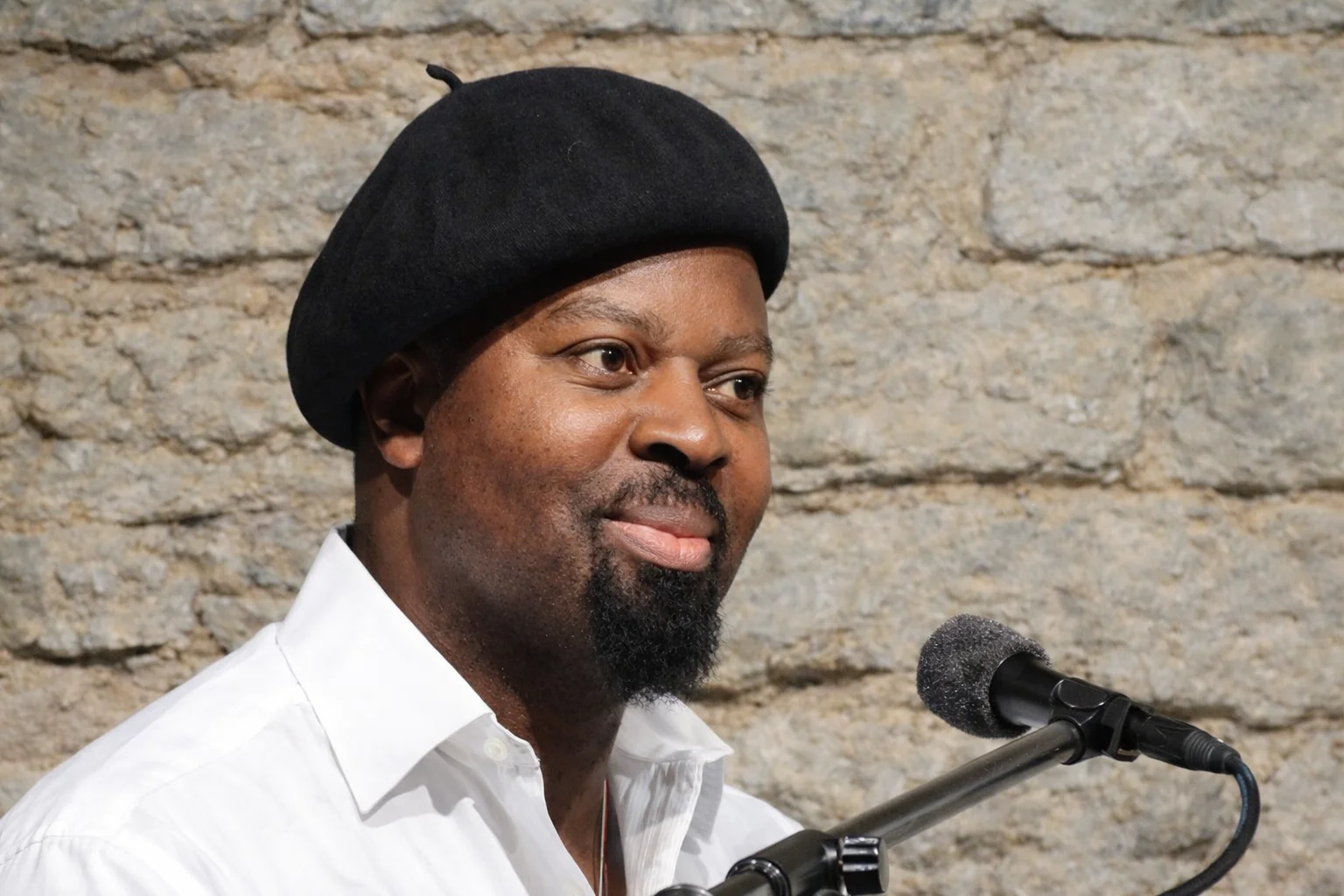
Ben Okri is a Nigerian-born British poet and novelist. He is best known for The Famished Road, which won the Booker Prize in 1991. He is regarded as a leading voice in postcolonial literature. His work covers novels, poetry, essays and theatre. He has received major international awards and honours, including a knighthood for services to literature. This biography on First Nigerian explores Ben Okri’s age, early life, family background, books, literary career, awards, net worth, and personal life.
Ben Okri Early Life and Education
Ben Okri was born on 15 March 1959 in Minna. He grew up in a culturally mixed family. His father, Silver Okri, was a lawyer of Urhobo descent. His mother, Grace Okri, was half Igbo and came from a royal lineage.
When Ben was still a baby, at less than two years old, his father moved the family to London so that he could study law. As a result, Ben spent his earliest years in London and went to primary school in Peckham.
In 1966, the family moved back to Nigeria, where his father practised law in Lagos and offered free or discounted services to those who couldn’t afford them.
Ben Okri attended schools in Ibadan and Ikenne, and in 1968, he started his secondary education at Urhobo College in Warri as the youngest in his class.
His exposure to the Nigerian Civil War and the culture around him, where his peers claimed to have visions of spirits, later inspired much of his fiction.
How Ben Okri Started Writing
At 14, after a short university physics programme rejected him because of his age and lack of qualifications, Okri realised that poetry was his calling. He began writing articles on social and political issues, but no one published them, so he reworked them into short stories. Some of these later appeared in women’s journals and evening papers.
He later said that his criticism of the government in some of his early works put him on a death list, forcing him to leave the country. In 1978, he moved back to England and studied comparative literature at the University of Essex with a Nigerian government grant.
When funding fell through, he became homeless for a time, living in parks or with friends, and he said that period was crucial to his work because he wrote constantly, and his desire to write intensified.
Literary breakthrough and Booker Prize success
His literary career began in 1980 when he published his debut novel, Flowers and Shadows, at the age of 21.
From 1983 to 1986, he was poetry editor of West Africa magazine, and he contributed regularly to the BBC World Service between 1983 and 1985 while continuing to publish. He cemented his reputation when his novel The Famished Road won the Booker Prize in 1991, making him the youngest winner at 32.
He wrote that novel while living in a Notting Hill flat rented from publisher friend Margaret Busby from 1988, and he said that period brought a tranquillity to his writing. That same flat was where he wrote the short stories that became Stars of the New Curfew in 1988.
Roles in literary organisations and recognition
He became vice-president of the English Centre for International PEN in 1997, and joined the board of the Royal National Theatre in 1999.
Caine Prize for African Writing appointed him vice-president on 26 April 2012, following 13 years of involvement with the prize since its establishment.
In 2022, he became vice-president of the Royal Central School of Speech and Drama, and in 2023, he received a knighthood in the Birthday Honours for services to literature.
Literary style and major works
The Nigerian Civil War shaped Ben Okri’s outlook and strongly influenced his focus on instability, trauma, and fragmented reality. He often expresses these themes through symbolism rather than direct description.
Nigerian oral storytelling traditions shaped his rhythm, repetition and use of allegory.
His journalism experience strengthened his structure and observation before he moved into fiction. His writing later evolved from linear storytelling to a mix of realism, mysticism and philosophical reflection.
Literary critics regard Ben Okri as one of Africa’s leading writers and a significant figure in postmodern and postcolonial literature. His best-known work is The Famished Road, which is part of a trilogy with Songs of Enchantment (1993) and Infinite Riches (1998).
The trilogy follows Azaro, a spirit-child narrator, through the turmoil of a nation that reflects Okri’s memories of war-torn Nigeria.
His writing is difficult to categorise. Critics often label his writing as postmodern, though they argue that his belief in the spirit world complicates that classification. Ben Okri also rejects the label of magical realism. He says his work follows a “dream logic” and is all about asking what reality actually is.
He says he grew up in a tradition that views reality as having more dimensions, including legends, myths, ancestors, spirits and death. So he believes everyone’s reality is different. He also warns that stories we read or tell can subtly alter our world.
Poetry, essays, plays, and visual art
Aside from novels, Okri has published poetry, essays, and short stories, and he has written plays and film scripts. His short fiction tends to be more realistic than his novels, but still shows Africans in communion with spirits.
His poetry and nonfiction often have a political tone, focusing on Africa’s potential and the world’s ability to overcome modern problems. He wrote the text for the film N – The Madness of Reason, which won the 2015 Ensor Award for Best Film, and in 2018, he adapted Albert Camus’s The Outsider into a play.
In April 2019, he gave the keynote address at the Berlin African Book Festival, and in 2021, he published a volume of collected poems titled A Fire in My Head: Poems for the Dawn.
Ben Okri has also worked with visual art since his youth, and in 2023, he collaborated with painter Rosemary Clunie on the exhibition Firedreams at the Bomb Factory, Marylebone. They previously combined paintings and stories in the 2017 book The Magic Lamp: Dreams of Our Age.
Influences and inspirations
Okri has often credited the philosophical books on his father’s shelf as shaping his thinking as much as literary works. He also points to Francis Bacon and Michel de Montaigne as major influences on his writing. He also draws from stories like Aesop’s Fables, Arabian Nights, Shakespeare’s A Midsummer Night’s Dream, and Coleridge’s The Rime of the Ancient Mariner.
Okri’s 1999 epic poem Mental Fight takes its title from a line in William Blake’s poem And did those feet in ancient time. Critics also note a close relationship between Blake’s writing and Okri’s poetry. Oral traditions from his community and his mother’s storytelling shaped his work, while his experience of the Nigerian civil war inspired much of his writing.
On the final day of the 2021 COP26 climate meeting, he wrote about the existential threat of climate change and argued that humans need a new art and psychology to overcome apathy and denial.
Honours, Awards and Recognition
Ben Okri has received international recognition over several decades, including major literary prizes, national honours, and institutional distinctions for his contribution to literature:
| Year | Award name | Work |
| 1987 | Commonwealth Writers’ Prize (Africa Region) | Incidents at the Shrine |
| 1987 | Aga Khan Prize for Fiction | The Dream Vendor’s August |
| 1991 | Booker Prize | The Famished Road |
| 2001 | Officer of the Order of the British Empire (OBE) – Birthday Honours | Services to literature |
| 2003 | 100 Great Black Britons | Not applicable (public recognition list) |
| 2014 | Bad Sex in Fiction Award | Not applicable |
| 2023 | Knighthood (Knight Bachelor) – Birthday Honours | Services to literature |
Ben Okri Famous Works
The following bibliography lists Ben Okri’s published works across novels, poetry, essays, and other creative forms.
Novels by Ben Okri
Ben Okri has produced a body of work that blends realism with allegory and philosophical fiction.
Flowers and Shadows (1980)
The Landscapes Within (1981)
The Famished Road (1991)
Songs of Enchantment (1993)
Astonishing the Gods (1995)
Dangerous Love (1996)
Infinite Riches (1998)
In Arcadia (2002)
Starbook (2007)
The Age of Magic (2014)
The Freedom Artist (2019)
Poetry and Short Fiction Collections
Incidents at the Shrine (1986)
Stars of the New Curfew (1988)
An African Elegy (1992)
Birds of Heaven (1996)
Mental Fight (1999)
Tales of Freedom (2009)
A Time for New Dreams (2011)
Wild (2012)
The Mystery Feast: Thoughts on Storytelling (2015)
The Magic Lamp: Dreams of Our Age (2017)
Rise Like Lions: Poetry for the Many (edited anthology, 2018)
Prayer for the Living (2019)
A Fire in My Head: Poems for the Dawn (2021)
Essays and Non-Fiction
A Way of Being Free (1997)
The Mystery Feast also functions partly as reflective prose on storytelling (2015)
The Magic Lamp: Dreams of Our Age (2017)
Plays and Scripted Works
N – The Madness of Reason (film text/screenplay, 2014)
Contributions and Edited Works
Rise Like Lions: Poetry for the Many (editor, 2018)
Digital and Online Fiction
“A Wrinkle in the Realm” (The New Yorker, February 2021)
Adaptations and Cultural Impact
Ben Okri has influenced theatre, film, academic study and contemporary African writing beyond the literary sphere.
Groups have adapted his novels, including The Age of Magic, for the stage in experimental theatre contexts. At the same time, his adaptation of Albert Camus’s The Outsider shows his direct engagement with drama.
In film, his influence is mainly thematic, with work such as N – The Madness of Reason reflecting philosophical and existential concerns rather than conventional screen adaptations.
His narrative style, particularly in The Famished Road, has shaped contemporary African and diaspora writers through its blend of myth, politics and psychology.
Universities across Africa, Europe and North America include his works in their curricula, particularly in courses on postcolonial and African literature.
Media Appearances and Interviews
Ben Okri has featured in several high-profile literary interviews, particularly around his novels, poetry, and philosophical writing.
BBC:
- HARDtalk (BBC News) interview, 2016
- The Forum (BBC World Service), 2009
Major festival interviews:
- Hay Festival (2025, 2026) — long-form stage conversations on new novels
- Oxford Literary Festival (2019) — interview on The Freedom Artist
- Edinburgh International Book Festival — multiple talks, including Festival for the Broken-Hearted
- Jaipur Literature Festival (2012) — interview on world literature
Documented talks/lectures:
- Norfolk & Norwich Festival (2018) — speech on citizenship and storytelling
- Oxford lecture: “Writing and the Adventures of the Mind” (2014)
- Berlin African Book Festival keynote (2019)
- 4 Corners Festival talk (2024) — “Stories that Shape Us”
Recorded/filmed content:
- Louisiana Literature Festival interview (2019) — “The Day I Became a Writer”
- CCCB lecture series (Africa 1960–2010) — filmed conference talk
- Various Poetry Foundation / literary video interviews (ongoing appearances)
Ben Okri Wife and Children
Biographies and reports suggest that Ben Okri married Nigerian actress Victoria Inyama and that the couple had children together.
Several sources claim that Okri married Nollywood actress Victoria Inyama, and that they have three children together. However, reports on this detail are inconsistent across publications. The children’s names are Mark and Rachael. The family has not published the name of their other son.
There are also reports that they later separated, with mention of accusations from Victoria Inyama.
Ben Okri Net Worth
Estimates place Ben Okri’s net worth between $5 million and $7 million. He earns most of his income from writing books.
His novels, poetry, essays, and short stories bring in ongoing income through sales and royalties.
Winning the Booker Prize for The Famished Road helped him gain international recognition and increase his earnings.
Early in his career, he earned money working as a poetry editor for West Africa magazine and contributing to BBC broadcasts.
He also earns income from speaking at events, university lectures, literary festivals, and working on film, theatre, and scriptwriting projects.