Article Was Last Updated August 26, 2026
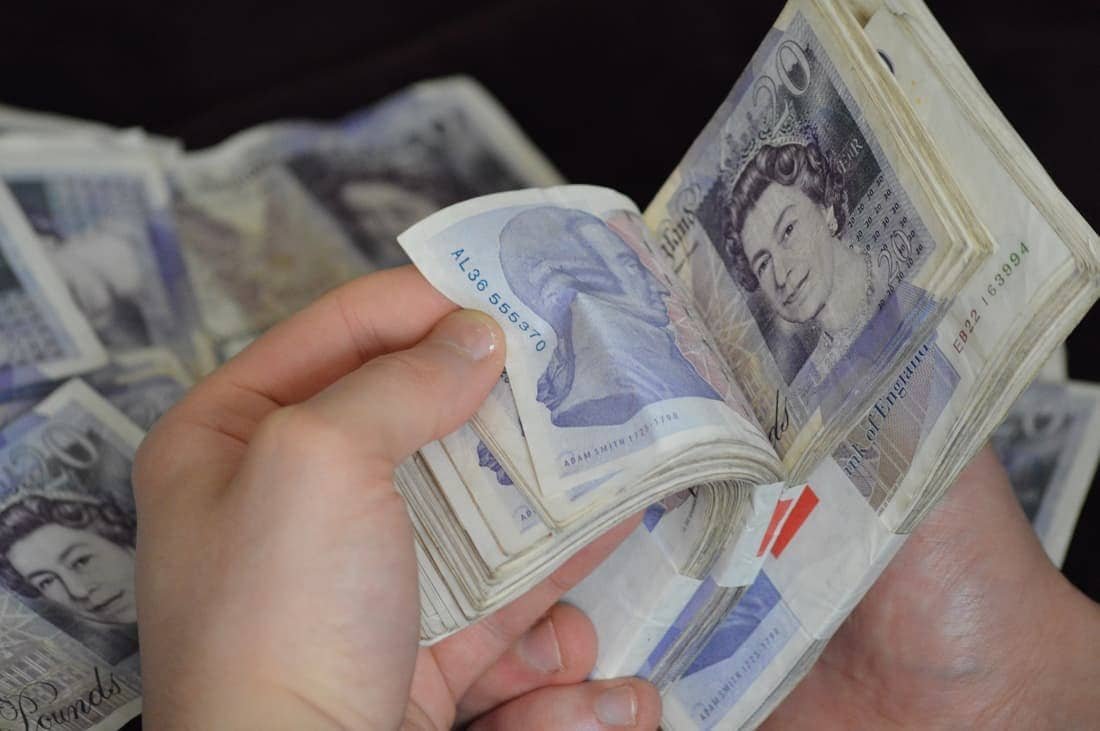
England uses the British Pound Sterling (GBP). The pound is the official currency of England and the rest of the United Kingdom. It uses the symbol (£) and the international currency code GBP.
The Bank of England issues banknotes used in England, while the Royal Mint produces UK circulating coins. Together, they supply the cash used for everyday transactions across the country.
Although England is one of the four countries that make up the United Kingdom, it does not have its own currency. Instead, England, Scotland, Wales and Northern Ireland all use the Pound Sterling. However, Scotland and Northern Ireland issue their own sterling banknotes, which have the same face value as Bank of England notes.
Today, most people in England pay with debit cards, credit cards or contactless payment services such as Apple Pay and Google Pay. Nevertheless, cash remains in circulation, and many businesses continue to accept it.
If you travel to England, you’ll need British Pounds to pay with cash. Therefore, if you carry euros, US dollars or another foreign currency, you’ll usually need to exchange it before making purchases. Banks, currency exchange providers and ATMs all offer exchange services, although their rates and fees vary.
What Is The British Pound Sterling?
The British Pound Sterling (GBP) is the official currency of England and the rest of the United Kingdom. People usually call it the pound or sterling. Meanwhile, banks, exchange providers and financial markets use the ISO code GBP, while businesses display prices with the pound symbol (£).
One pound equals 100 pence (100p). Therefore, a price of £1.50 means one pound and 50 pence. Shops, supermarkets, restaurants and public transport across England use this pricing system.
England shares the Pound Sterling with Scotland, Wales and Northern Ireland. As a result, you do not need to exchange currency when travelling between the four UK nations.
The term “Pound Sterling” also distinguishes the UK’s currency from other currencies called the pound, including the Egyptian pound and the Lebanese pound. Consequently, international payment providers and currency exchanges use the GBP code to identify the British Pound accurately.
British Pound Coins And Banknotes
The British Pound comes in eight coins and four banknotes. The Royal Mint produces all UK coins, while the Bank of England issues banknotes used in England and Wales.
Coins include 1p, 2p, 5p, 10p, 20p, 50p, £1 and £2. People use them every day for shopping, transport, parking and other cash payments.
Banknotes come in £5, £10, £20 and £50 denominations. Since 2022, the Bank of England has issued only polymer notes. These notes include security features such as transparent windows, holograms, raised print and colour-changing images to help prevent counterfeiting.
Meanwhile, newer coins and banknotes feature King Charles III. However, many coins and banknotes bearing Queen Elizabeth II remain in circulation. Both designs circulate together, so you can use either for payments where they remain valid.
Can You Use Euros In England?
No. England uses the British Pound (GBP), not the euro. Shops, restaurants, hotels and transport services price goods and services in pounds.
Some airports, hotels and tourist businesses accept euros. However, they usually set their own exchange rates, which may cost more than standard market rates. They may also return your change in pounds.
If you bring euros or another foreign currency, exchange it for pounds before making cash payments. Alternatively, use a debit card, credit card or mobile wallet. Most payment terminals charge your card in British Pounds by default.
If a card terminal asks whether you want to pay in your home currency, choose British Pounds. This helps you avoid dynamic currency conversion, which often adds extra costs through less favourable exchange rates.
Best Ways To Pay In England
Most businesses in England accept debit cards, credit cards and contactless payments. You can also pay with digital wallets such as Apple Pay and Google Pay wherever contactless payments are available.
Cash still works across England, although some businesses no longer accept it. Small shops, cafés, markets and public toilets may still prefer or require cash, so carrying a small amount can help.
If you use an overseas bank card, check whether your bank charges foreign transaction or ATM withdrawal fees. Also, choose to pay in British Pounds whenever a payment terminal gives you the option. This lets your card provider apply the exchange rate instead of the retailer’s currency conversion service.
Where To Exchange Currency In England
You can exchange foreign currency before or after you arrive in England. Banks, currency exchange bureaux, selected Post Office branches and airport exchange counters all offer exchange services. Many online travel money providers also let you order British Pounds before your trip.
ATMs across England dispense British Pounds directly from compatible debit and credit cards. Before using one, check whether your bank charges overseas withdrawal fees or whether the ATM operator adds its own fee.
Exchange rates and service charges vary between providers. Therefore, compare the total amount you will receive instead of focusing only on the advertised exchange rate. Many providers also display any commission or handling fee before you complete the transaction.
Can You Use Scottish And Northern Irish Banknotes In England?
Yes. Scottish and Northern Irish banknotes have the same value as Bank of England notes because they are all denominated in Pound Sterling.
However, shops and businesses in England do not have to accept Scottish or Northern Irish banknotes. While many retailers take them without issue, some refuse them because staff are less familiar with their designs or cannot easily verify their security features.
If a business declines a Scottish or Northern Irish note, you can usually spend it at another retailer or deposit it into a UK bank account. You do not need to exchange it for a Bank of England note because its face value remains the same.
Currency Tips For Visiting England
Plan how you’ll pay before you travel. Carry a small amount of British Pounds for places that prefer cash, but rely on a debit or credit card for most purchases.
Tell your bank about your trip if it recommends travel notifications. This can reduce the chance of your bank blocking overseas transactions.
Before you withdraw cash or pay by card, check your bank’s foreign transaction and ATM fees. If a payment terminal offers a choice between British Pounds and your home currency, select British Pounds. This usually lets your card provider apply the exchange rate instead of the retailer.
Keep a second payment method, such as a backup card, in case your primary card is lost, damaged or declined. This can help you avoid payment problems during your trip.