Article Was Last Updated August 25, 2026
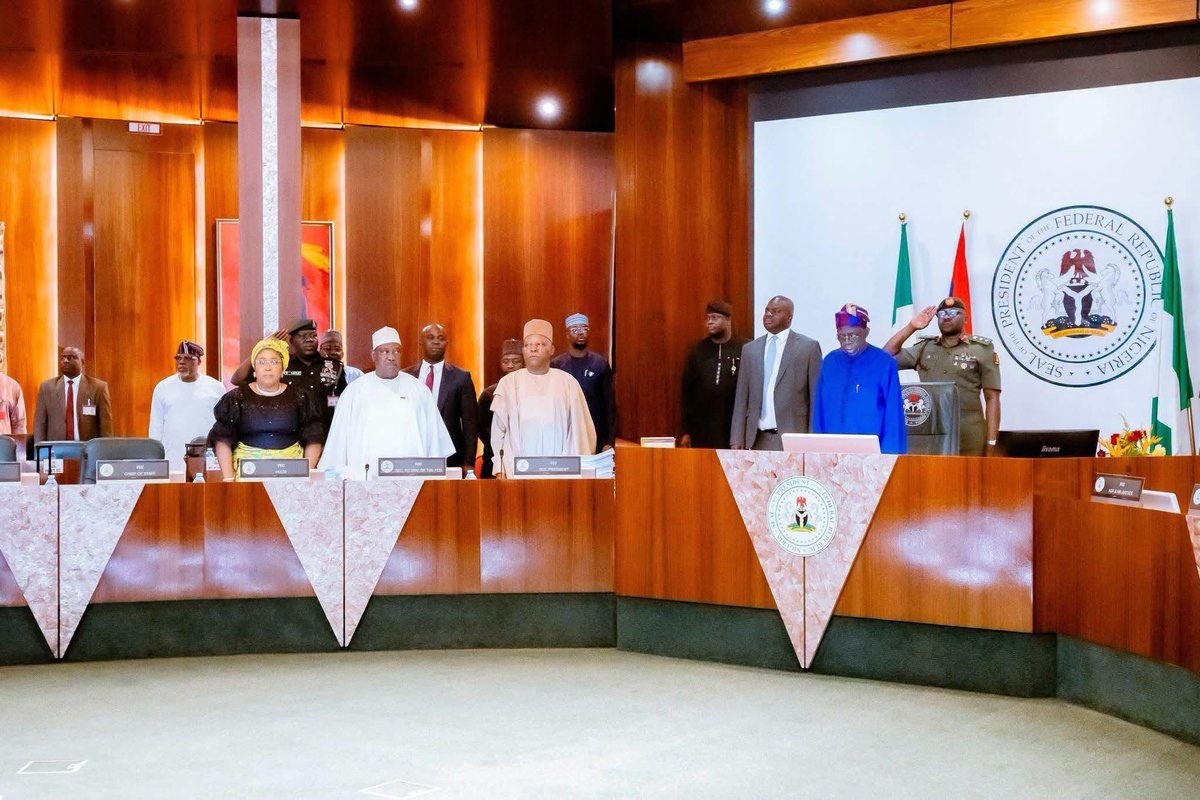
Nigeria’s ministers lead federal ministries and help President Bola Ahmed Tinubu run the country. The President appoints ministers to serve in the Federal Executive Council (FEC), where they develop policies, oversee government programmes and manage key sectors such as finance, defence, education, health, agriculture, power and infrastructure. This updated Nigeria ministers list provides the current ministers in Nigeria as of July 2026, including their portfolios, ministries and states of origin. It also explains how the President appoints ministers and outlines the role of Ministers of State within the Federal Executive Council.
Who Are the Current Ministers in Nigeria?
As of July 2026, Nigeria has 52 cabinet-level members, including substantive ministers and Ministers of State. Section 147 of the Constitution of the Federal Republic of Nigeria requires the President to appoint at least one minister from each state to serve in the Federal Executive Council. Nigeria’s constitutional system also defines important national symbols and institutions.
Each ministry has a substantive minister who leads the ministry. Some ministries also have a Minister of State who supports the substantive minister by helping to implement government policies and carry out specific responsibilities.
Nigeria Ministers List (2026)
| Minister | Ministry | Portfolio | State |
| Hannatu Musa Musawa | Art, Culture, Tourism and the Creative Economy | Honourable Minister | Katsina |
| Gen. Christopher G. Musa (Rtd.) | Defence | Honourable Minister | Kaduna |
| Dr. Bernard M. Doro | Humanitarian Affairs and Poverty Reduction | Honourable Minister | Benue |
| Sen. Abubakar Kyari | Agriculture and Food Security | Honourable Minister | Borno |
| Engr. Muttaqa Rabe Darma | Housing and Urban Development | Honourable Minister | Kano |
| Muhammadu Maigari Dingyadi | Labour and Employment | Honourable Minister | Sokoto |
| Sen. Abubakar Atiku Bagudu | Budget and Economic Planning | Honourable Minister | Kebbi |
| Prof. Muhammad Ali Pate | Health and Social Welfare | Coordinating Minister | Bauchi |
| Dr. Maruf Tunji Alausa | Education | Honourable Minister | Lagos |
| Olubunmi Tunji-Ojo | Interior | Honourable Minister | Ondo |
| Bianca Odumegwu-Ojukwu | Foreign Affairs | Honourable Minister | Anambra |
| Nyesom Wike | Federal Capital Territory | Honourable Minister | Rivers |
| Joseph Terlumun Utsev | Water Resources and Sanitation | Honourable Minister | Benue |
| David Umahi | Works | Honourable Minister | Ebonyi |
| Dr. Jumoke Oduwole | Industry, Trade and Investment | Honourable Minister | Lagos |
| Imaan Sulaiman-Ibrahim | Women Affairs | Honourable Minister | Nasarawa |
| Shuaibu Audu | Steel Development | Honourable Minister | Kogi |
| Engr. Abubakar Momoh | Regional Development | Honourable Minister | Edo |
| Mohammed Idris | Information and National Orientation | Honourable Minister | Niger |
| Lateef Olasunkanmi Fagbemi, SAN | Justice and Attorney General of the Federation | Honourable Minister | Kwara |
| Zephaniah Bitrus Jisalo | Special Duties and Inter-Governmental Affairs | Honourable Minister | FCT |
| Dr. Bosun Tijani | Communications, Innovation and Digital Economy | Honourable Minister | Ogun |
| Taiwo Oyedele | Finance and Coordinating Minister of the Economy | Honourable Minister | Oyo |
| Adegboyega Oyetola | Marine and Blue Economy | Honourable Minister | Osun |
| Dr. Oladele Henry Alake | Solid Minerals Development | Honourable Minister | Ekiti |
| Dr. Kingsley T. Udeh | Innovation, Science and Technology | Honourable Minister | Enugu |
| Festus Keyamo, SAN | Aviation and Aerospace Development | Honourable Minister | Delta |
| Ayodele Olawande | Youth Development | Honourable Minister | Ekiti |
| Balarabe Abbas Lawal | Environment | Honourable Minister | Kaduna |
| Idi Mukhtar Maiha | Livestock Development | Honourable Minister | Adamawa |
| Joseph Olasunkanmi Tegbe | Power | Honourable Minister | Oyo |
Nigeria Ministers and Their Portfolios
Below are some of Nigeria’s most important ministries and the responsibilities they oversee.
Finance
The Federal Ministry of Finance is headed by Taiwo Oyedele, who also serves as the Coordinating Minister of the Economy. The ministry manages public finances, fiscal policy, budgeting coordination, debt management and revenue generation. It plays a central role in maintaining economic stability and supporting national development.
Defence
Gen. Christopher G. Musa (Rtd.) leads the Ministry of Defence. The ministry coordinates Nigeria’s armed forces, national security policies, military operations and defence procurement, making it one of the country’s most strategic ministries.
Education
Dr. Maruf Tunji Alausa oversees the Federal Ministry of Education. The ministry develops education policies, supervises federal tertiary institutions, improves basic education standards and promotes skills development across Nigeria.
Health
Prof. Muhammad Ali Pate serves as Coordinating Minister of Health and Social Welfare. The ministry formulates national healthcare policies, strengthens disease prevention, oversees federal hospitals and coordinates public health programmes.
Works
David Umahi heads the Federal Ministry of Works. Its primary responsibilities include constructing and maintaining federal highways, bridges and other strategic infrastructure that support economic growth.
Interior
Olubunmi Tunji-Ojo leads the Ministry of Interior, which supervises immigration, correctional services, civil defence, fire services and citizenship matters while strengthening internal security.
Foreign Affairs
Bianca Odumegwu-Ojukwu serves as Minister of Foreign Affairs. The ministry manages Nigeria’s diplomatic relations, foreign policy, international cooperation and consular services worldwide.
Power
Joseph Olasunkanmi Tegbe heads the Federal Ministry of Power. The ministry oversees electricity policy, power sector reforms, transmission projects and initiatives aimed at improving electricity supply.
Petroleum Resources
The petroleum sector is supervised by two Ministers of State. Sen. Heineken Lokpobiri oversees oil matters, while Rt. Hon. Ekperikpe Ekpo oversees gas. Together, they support policy implementation across Nigeria’s oil and gas industry, one of the country’s largest sources of revenue.
Justice
Lateef Olasunkanmi Fagbemi, SAN, serves as Attorney General of the Federation and Minister of Justice. The ministry advises the Federal Government on legal matters, drafts legislation and represents the government in legal proceedings.
Agriculture
Sen. Abubakar Kyari heads the Federal Ministry of Agriculture and Food Security. The ministry focuses on food security, agricultural development, farmer support programmes, livestock policies and rural economic growth.
Communications
Dr. Bosun Tijani leads the Federal Ministry of Communications, Innovation and Digital Economy. The ministry promotes digital transformation, technology innovation, broadband expansion, cybersecurity and Nigeria’s digital economy.
List of Nigeria Ministers of State
A Minister of State is appointed to assist the substantive minister in managing a ministry. While the substantive minister has overall responsibility for the ministry, the Minister of State typically oversees delegated policy areas and supports programme implementation.
| Minister of State | Supervising Ministry | Responsibilities |
| Dr. Bello Mohammed Matawalle | Defence | Supports defence administration and policy implementation |
| Sen. Aliyu Sabi Abdullahi | Agriculture and Food Security | Assists with agricultural programmes and food security initiatives |
| Rt. Hon. Yusuf Abdullahi Atah | Housing and Urban Development | Supports housing and urban development projects |
| Dr. Doris Uzoka-Anite | Budget and Economic Planning | Assists with national planning and budget implementation |
| Dr. Iziaq Adekunle Salako | Health and Social Welfare | Supports healthcare policy implementation |
| Dr. Suwaiba Said Ahmad | Education | Assists with education programmes and reforms |
| Amb. Sola Enikanolaiye | Foreign Affairs | Supports diplomatic engagements and foreign policy implementation |
| Dr. Mahmoud Mairiya | Federal Capital Territory | Assists with FCT administration |
| Barr. Bello Muhammad Goronyo | Works | Supports infrastructure and road development projects |
| Sen. John Owan Enoh | Industry, Trade and Investment | Assists with trade, investment and industrial development |
| Uba Maigari Ahmadu | Regional Development | Supports regional development initiatives |
| Rt. Hon. Ekperikpe Ekpo | Petroleum Resources (Gas) | Oversees gas sector policies |
| Sen. Heineken Lokpobiri | Petroleum Resources (Oil) | Oversees oil sector policies |
How Nigerian Ministers Are Appointed
Nigerian government ministers are appointed under Section 147 of the Constitution of the Federal Republic of Nigeria.
The appointment process follows several key stages:
- The President nominates ministerial candidates.
- The Nigerian Senate screens and confirms each nominee.
- Following confirmation, the President assigns each minister to a specific ministry or portfolio.
- Ministers take the oath of office before assuming official duties.
- The President may reshuffle portfolios, appoint replacements or remove ministers whenever necessary to improve government performance or respond to changing national priorities.
This process allows the President to organise the Federal Executive Council while ensuring constitutional requirements for state representation are met.
Nigeria’s ministerial system has evolved through military and civilian administrations. Since the return to democratic rule in 1999, every elected President has appointed ministers in accordance with the Constitution.