Article Was Last Updated August 26, 2026
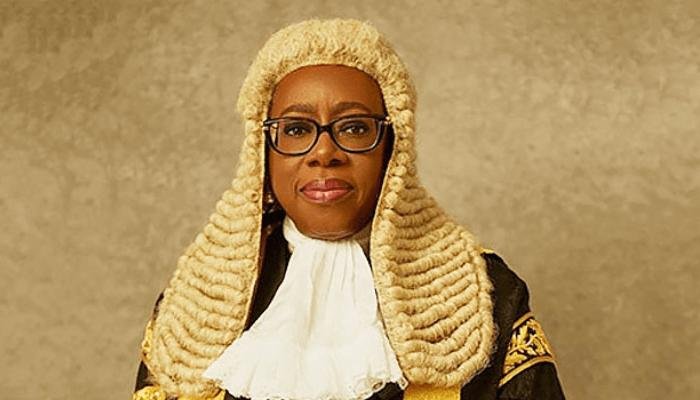
The list of Chief Justice of Nigeria from 1960 till date contains 18 post-independence Chief Justices, starting with Sir Adetokunbo Ademola, who served when Nigeria gained independence on 1 October 1960, and ending with Justice Kudirat Motonmori Olatokunbo Kekere-Ekun, who became substantive Chief Justice in September 2024. Ademola became Chief Justice of the Federation in 1958 and remained in office until 1972.
List of Chief Justice of Nigeria from 1960 Till Date
| No. | Chief Justice of Nigeria | Tenure |
| 1 | Sir Adetokunbo Ademola | 1958–1972 |
| 2 | Taslim Olawale Elias | 1972–1975 |
| 3 | Darnley Arthur Alexander | 1975–1979 |
| 4 | Atanda Fatai-Williams | 1979–1983 |
| 5 | George Sodeinde Sowemimo | 1983–1985 |
| 6 | Ayo Gabriel Irikefe | 1985–1987 |
| 7 | Mohammed Bello | 1987–1995 |
| 8 | Muhammadu Lawal Uwais | 1995–2006 |
| 9 | Salisu Modibbo Alfa Belgore | 2006–2007 |
| 10 | Idris Legbo Kutigi | 2007–2009 |
| 11 | Aloysius Iyorgyer Katsina-Alu | 2009–2011 |
| 12 | Dahiru Musdapher | 2011–2012 |
| 13 | Aloma Mariam Mukhtar | 2012–2014 |
| 14 | Mahmud Mohammed | 2014–2016 |
| 15 | Walter Samuel Nkanu Onnoghen | 2016–2019 |
| 16 | Ibrahim Tanko Muhammad | 2019–2022 |
| 17 | Olukayode Ariwoola | 2022–2024 |
| 18 | Kudirat Motonmori Olatokunbo Kekere-Ekun | 2024–date |
The National Judicial Council records the former Chief Justice as Olukayode Ariwoola, while the Supreme Court identifies Kudirat Kekere-Ekun as the serving Chief Justice.
Salary of Chief Justice of Nigeria 2026
The salary of the Chief Justice of Nigeria in 2026 is ₦5,385,047.26 per month, according to figures reported during the 2024 judicial salary review. The amount gives an annual equivalent of ₦64,620,567.12, or about ₦64.62 million. The figure covers the CJN’s salary and regular allowances.
President Bola Tinubu signed the Judicial Office Holders (Salaries and Allowances, etc.) Act, 2024, on 9 August 2024 after the National Assembly approved higher pay for judicial officers.
CJN Basic Salary and Allowances
The basic salary of the Chief Justice of Nigeria differs from the total monthly remuneration.
A remuneration schedule issued during the salary review proposed a CJN basic salary of ₦10,091,917.50 per year, which equals about ₦840,993 per month. The same schedule puts the proposed annual remuneration at ₦64,083,676.13 after adding the listed allowances.
The schedule listed the following allowances:
| Allowance | Rate |
| Personal Assistant | 25% of basic salary |
| Hardship | 100% |
| Outfit/Robe | 25% |
| Restricted Lifestyle | 100% |
| Dual Responsibility | 20% |
| Long Service | 10% |
| Legal Researchers | 70% |
| Entertainment | 45% |
| Medical | 40% |
| Leave | 100% of basic salary |
However, the later legislative process reported a ₦5,385,047.26 monthly package for the CJN. That figure covers the total monthly remuneration rather than basic salary alone.
Other Benefits for the Chief Justice of Nigeria
The CJN also receives benefits outside the regular monthly package.
The remuneration proposals included $2,000 per night in estacode when applicable, duty tour allowances, an optional motor vehicle loan and ₦80,775,707.70 in severance gratuity after successful completion of tenure.
The remuneration framework also covers official accommodation, furniture, security, utilities, medical care and other official expenses.
These benefits do not form part of the regular ₦5,385,047.26 monthly package unless the relevant payment applies.
CJN Salary Before and After the 2024 Review
Before the 2024 review, the CJN’s basic salary stood at ₦3,363,972.50 per year, or about ₦280,331 per month.
The remuneration review proposed a new basic salary of ₦10,091,917.50 per year, or about ₦840,993 per month, before allowances.
| CJN Basic Salary | Previous Structure | Reviewed Proposal |
| Annual | ₦3,363,972.50 | ₦10,091,917.50 |
| Monthly equivalent | About ₦280,331 | About ₦840,993 |
The wider judicial remuneration review provided a 300% increase in salaries, allowances and fringe benefits for judicial officers. The House of Representatives approved the bill in March 2024, the Senate approved it in June, and President Tinubu signed it into law on 9 August 2024. Other federal institutions operate under separate pay structures. FirstNigerian also covers the Nigeria Customs Service salary structure with details of salaries, ranks and allowances.
Chief Justices of Nigeria Before 1960
The office existed before Nigeria gained independence. Sir Edwin Speed, Sir Ralph Combe, Donald Kingdon, Sir John Verity and Sir Stafford Foster-Sutton served before Sir Adetokunbo Ademola became Chief Justice of the Federation in 1958.
Ademola therefore starts the 1960 list because he held office when Nigeria became independent. Nigeria later experienced periods of military rule between 1966 and 1999.
Chief Justices from 1960 to 2024
Sir Adetokunbo Ademola to Mohammed Bello
Sir Adetokunbo Ademola became Chief Justice of the Federation in 1958 and remained in office through independence until 1972. Taslim Olawale Elias succeeded him and served until 1975, when Darnley Arthur Alexander took over.
Alexander served until 1979. Atanda Fatai-Williams then held the office until 1983, followed by George Sodeinde Sowemimo until 1985 and Ayo Gabriel Irikefe until 1987.
Mohammed Bello succeeded Irikefe and served from 1987 to 1995.
Muhammadu Lawal Uwais to Dahiru Musdapher
Muhammadu Lawal Uwais succeeded Mohammed Bello in 1995 and served until 2006. Salisu Modibbo Alfa Belgore followed him from 2006 to 2007, while Idris Legbo Kutigi served from 2007 to 2009. Muhammadu Uwais later chaired the Electoral Reform Committee established by President Umaru Musa Yar’Adua.
Aloysius Iyorgyer Katsina-Alu became Chief Justice in 2009 and served until 2011. Dahiru Musdapher then held the office from 2011 to 2012.
The NJC’s current former-CJN page contains an inconsistent date entry for Uwais, but historical records place his tenure from 1995 to 2006.
Aloma Mariam Mukhtar to Ibrahim Tanko Muhammad
Aloma Mariam Mukhtar became Chief Justice in 2012 and served until 2014. She became the first woman to hold the office.
Mahmud Mohammed succeeded Mukhtar in 2014 and served until 2016. Walter Samuel Nkanu Onnoghen then served from 2016 to 2019, followed by Ibrahim Tanko Muhammad from 2019 to 2022.
Olukayode Ariwoola to Kudirat Kekere-Ekun
Olukayode Ariwoola became Chief Justice in 2022 and served until 2024. Kudirat Motonmori Olatokunbo Kekere-Ekun succeeded him.
Kekere-Ekun became Acting Chief Justice on 23 August 2024 and substantive CJN on 30 September 2024. She remains the current Chief Justice of Nigeria.
Current Chief Justice of Nigeria
Justice Kudirat Motonmori Olatokunbo Kekere-Ekun was born on 7 May 1958. She earned her LL.B from the University of Lagos in 1980, qualified as a barrister in 1981 and obtained an LL.M from the London School of Economics and Political Science in 1983.
Kekere-Ekun joined the Lagos State Judiciary as a magistrate in 1989, became a High Court judge in 1996, joined the Court of Appeal in 2004 and reached the Supreme Court in 2013.
She also chairs the National Judicial Council.
First Female Chief Justice of Nigeria
Aloma Mariam Mukhtar became the first female Chief Justice of Nigeria in 2012 and served until 2014.
Kudirat Kekere-Ekun became the second woman to hold the office in 2024.
Appointment of the Chief Justice of Nigeria
Section 231 of the Constitution of the Federal Republic of Nigeria states that the President appoints the Chief Justice on the recommendation of the National Judicial Council, subject to confirmation by the Senate.
The nominee must qualify to practise law in Nigeria and must have been qualified for at least 15 years.
The Constitution also provides for an acting Chief Justice when the office becomes vacant, or the CJN cannot perform the functions of the office.
The President also appoints members of the Federal Executive Council, subject to the constitutional requirements governing ministers.
Role of the Chief Justice of Nigeria
The Chief Justice heads the Supreme Court of Nigeria and chairs the National Judicial Council.
The CJN also performs judicial and administrative duties connected with the Supreme Court and the administration of the judiciary.