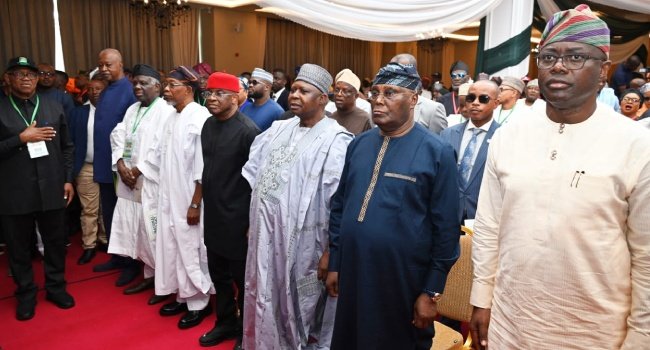
The opposition’s attempt to build a common platform for the 2027 presidential election is exposing disagreements over more than the identity of a potential candidate. While the G-100 Alliance is working towards an agreement among opposition parties, some aspirants are protecting their political ambitions and others are demanding a clearer programme before supporting the arrangement.
The G-100 has given itself until September 30 to reach an agreement after representatives of six opposition parties attended a summit at the Shehu Musa Yar’Adua Centre in Abuja. Ambassador Umanu Elijah, a member of the group, said the talks had yet to produce a choice but remained active. “We have not adopted a single candidate yet, but that is the goal,” he said.
Elijah said contacts between the politicians formed part of the process, citing Peter Obi’s meeting with Oyo State Governor Seyi Makinde. He said the discussions continued across party lines and expressed confidence that the group would reach an agreement before the deadline.
Atiku Abubakar’s camp has meanwhile drawn a distinction between participating in negotiations and abandoning his presidential ambition. An ally of the former vice-president said Atiku remained willing to engage other political leaders and credited him with helping establish the African Democratic Congress as a platform for opposition cooperation. “Alhaji Atiku Abubakar is going to contest the 2027 election,” the source said.
Makinde’s position leaves another candidacy on the negotiating table. Allied Peoples’ Movement National Publicity Secretary Abubakar Yusuf said the Oyo governor entered the presidential contest with a clear objective and rejected any suggestion that his participation was merely part of a bargaining process. “He is in the race to win,” Yusuf said, adding that Makinde “has not stepped down for anybody”.
Obi’s Nigeria Democratic Congress has adopted a more flexible position towards the negotiations. National Publicity Secretary Osa Director said the party had the constitutional right to work with other political groups and confirmed its participation in discussions over a common candidate. He also maintained that cooperation did not diminish Obi’s prospects, describing him as “one of the best among all the other aspirants” and saying he had a strong chance of emerging from the process.
The debate has also shifted towards what the proposed alliance would stand for. African Action Congress candidate Omoyele Sowore questioned whether bringing politicians together solely to challenge the All Progressives Congress would provide a sufficient basis for governing Nigeria. “The real question is: united around what?” he said.
Sowore said he would not accept an agreement that lacked a common ideology, programme and commitment to changing the existing political system. He also rejected the idea that he should abandon his political project because other politicians reached an agreement, describing such an arrangement as an “elite political arrangement”.
Peter Agada of the Young Progressives Party has attached conditions to any possible agreement. He said cooperation would need to rest on “ideology, a development framework and architecture that takes power to the wards”, alongside measures to strengthen the micro-economy.
Two other parties have rejected the proposed model rather than set conditions for joining it. Democratic Leadership Alliance campaign spokesman Tosin Odeyemi said, “We don’t subscribe to a single presidential candidate and our candidate won’t be stepping down.”
Action Democratic Party National Chairman Yabbagi Sani also defended his party’s separate platform, pointing to its candidate, policies and manifesto. He said the interests of different parties would be difficult to reconcile within a short period and added, “Our candidate is not stepping down for anybody.”
The G-100 therefore faces a September 30 deadline while the participating politicians continue to differ over both leadership and the basis of cooperation. The negotiations must address the choice of candidate as well as the ideology, development agenda and political structure that the alliance would present to voters.