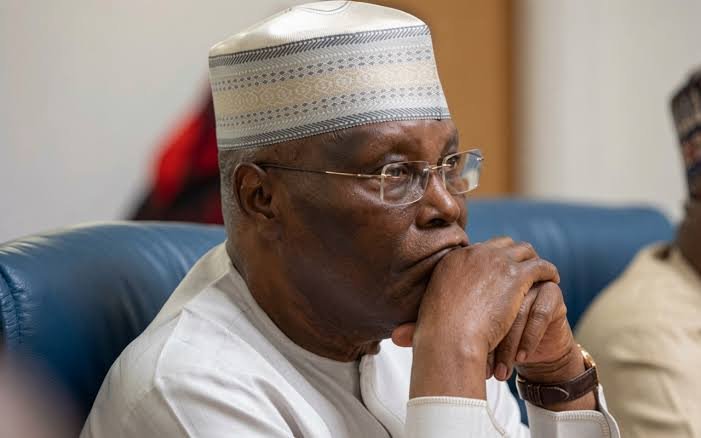
Former Vice President Atiku Abubakar has identified seven economic problems he says are still affecting Nigerians under President Bola Tinubu.
Atiku, through his Senior Special Assistant on Public Communication, Phrank Shaibu, said GDP growth, debt ratios and higher government revenue do not show the pressure on Nigerian households and businesses.
Atiku Lists Seven Economic Problems
He identified poverty, food insecurity, fuel subsidy removal, government debt, taxation, healthcare, education and infrastructure as problems facing Nigerians.
Atiku cited the International Monetary Fund’s latest Article IV consultation, which he said estimated that 63 per cent of Nigerians live below the national poverty line, while about 27 million people experienced food insecurity in late 2025.
He said high food, transport and housing costs continue to affect families despite slower inflation.
Atiku also criticised the removal of fuel subsidy, saying higher petrol and transport costs had increased expenses for households while many Nigerians had not seen the expected gains in healthcare, education, infrastructure and social welfare.
He questioned the Federal Government’s continued borrowing despite higher revenue and increased tax collections. He also called for details of crude-backed financing arrangements, including how much crude was pledged and how the government would repay the funds.
Atiku further warned that higher taxes could put more pressure on businesses dealing with expensive electricity, multiple levies and weak consumer demand.
He criticised the healthcare system over the cost of treatment, the departure of healthcare workers and high maternal mortality. On education, he said NELFUND loans do not solve problems involving school infrastructure, insecurity, teacher welfare and learning outcomes.
Meanwhile, Atiku said poor roads, unreliable electricity and high logistics costs continue to hurt businesses. He cited Manufacturers Association of Nigeria figures showing that 767 manufacturing companies had shut down while 335 others were distressed.
“The true measure of economic management is whether families are living better today than they were yesterday. On that score, this administration has failed,” Atiku said.