
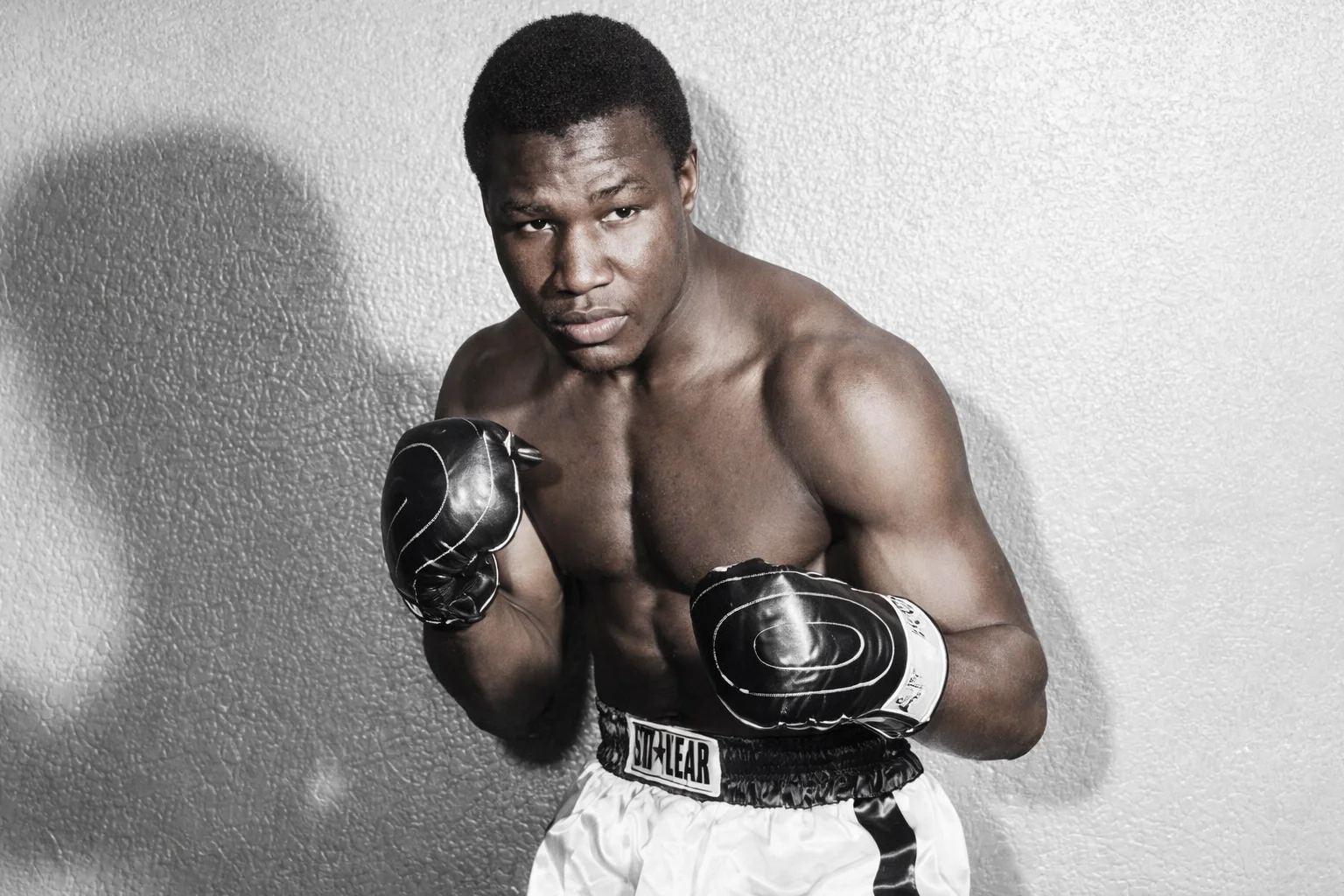
Dick Tiger was born Richard Ihetu on 14 August 1929 in Amaigbo and grew up in Aba, proud of his Igbo roots. As a teen in Lagos, he discovered boxing and went pro in 1952, winning the Nigerian middleweight title. He moved to England in 1955 and grabbed the British Commonwealth middleweight crown in 1958.
By 1959, he was in the US. He beat Gene Fullmer in 1962 for the WBA middleweight title, lost it, then won it back in 1965. In 1966, he jumped to light heavyweight and beat José Torres to become world champ, defending the belt twice before his only knockout loss to Bob Foster in 1968.
During the Nigerian Civil War, he served as a Biafran lieutenant. Tiger retired in 1971 with 60 wins, worked in New York, then returned to Nigeria, where he died the same year. He became the first African in the Boxing Hall of Fame and is still remembered as a legend.
Early Life and Family Background
Dick Tiger’s father was Ubuagwu Ihetu, though some people called him Ugboaja Ihetu. He worked as a trader and also wrestled for fun. His mother was Rebecca Ihetu, and the family called her Ejiatu or Taatu. Richard was one of seven kids, but the family first had eight, with one child dying later. Some of his siblings were named Godwin, Nelson, and Chinaka.
When Richard was 13, his dad died suddenly. Everything changed. His mom had to take care of the house, but had very little money. The older children stopped going to school.
After his dad died, Richard quit school to help his brothers at the market, buying and selling animals.
Childhood and Education
Dick Tiger grew up in Amaigbo and finished primary school at Holy Trinity (CMS) School. He didn’t go on to secondary school, though he also spent time at African School, Owowo, and Baptist Boys’ High School.
As a young man, he focused on work, sports, and boxing, leaving school early to support his family, which was common in colonial Nigeria. Boxing became his main source of income.
Later, he gave back to his community. Dick Tiger Memorial Secondary School in Amaigbo honours him, and the Dick Tiger Foundation supports education, scholarships, and local projects.
Early Life and Start in Boxing
Dick Tiger learned boxing under the guidance of British military officers in Nigeria. He turned professional in January 1952 and began fighting locally in Aba, Port Harcourt and Lagos. His debut came on 1 January 1952, when he knocked out Simon Eme in Aba. He followed with wins over Koko Kid and Easy Dynamite, before suffering his first loss to Tommy West in December 1952.
In 1953, he beat Lion Ring, Blackie Power and Simon Eme again, but also lost twice more to Tommy West, including a retirement loss in May. In 1954, he rebuilt momentum with wins over Robert Nwanne, Mighty Joe, Super Human Power and Peter Okptra, while also dropping a points decision to Tommy West early in the year. By 1955, he was clearly the top boxer in Nigeria. He beat Koko Kid in Amaigbo, Raheem Fagbemi and John Ama, then defeated Bolaji Johnson in August. That year closed out his Nigerian career.
Move to England
Later in 1955, he moved to England in search of tougher fights. The early months were difficult. Between December 1955 and March 1956, he lost several bouts to Alan Dean, Gerry McNally, Jimmy Lynas and George Roe. As 1956 went on, he settled in and started winning more regularly, beating Dennis Rowley, Alan Dean, Wally Scott and Jimmy Lynas, though defeats still came now and then.
Breakthrough in Britain
In 1957, his form improved sharply. He beat Johnny Read, Terry Downes and Marius Dori, with his only setback a points loss to Willie Armstrong in July. By late 1957 and early 1958, he was in full flow, knocking out Paddy Delargy, Jimmy Lynas and Johnny Read. On 27 March 1958 in Liverpool, he stopped Pat McAteer to win the Commonwealth middleweight title. It was his first major international belt and a clear breakthrough.
Transition to the United States
He continued fighting in Britain through 1958, picking up wins over Billy Ellaway and Yolande Pompey, though he lost a points decision to Ellsworth Webb. In 1959, Tiger began fighting regularly in the United States. He drew and lost against Rory Calhoun, traded wins with Randy Sandy, and split two fights with Joey Giardello. This period toughened him up and raised his profile in American boxing circles.
In 1960, he faced Wilf Greaves twice in Canada, losing the Commonwealth title in June before reclaiming it with a stoppage win in November. Throughout 1961, he built strong momentum in the US, beating Gene Armstrong, Ellsworth Webb, Hank Casey and William Pickett. By early 1962, he was firmly among the world’s elite. Wins over Florentino Fernández and Henry Hank earned him a title shot.
On 23 October 1962 at Candlestick Park in San Francisco, Dick Tiger beat Gene Fullmer by a 15-round unanimous decision to win the WBA middleweight title. In 1963, he drew with Fullmer in February and stopped him in August in Ibadan, retaining his titles and winning the inaugural WBC middleweight belt. In December 1963, he lost the middleweight crown to Joey Giardello in Atlantic City.
Regaining the crown
He stayed busy in 1964 and 1965, beating Don Fullmer, Rubin Carter and Juan Carlos Rivero. On 21 October 1965, he regained the middleweight titles with a unanimous decision over Giardello at Madison Square Garden. Early in 1966, he knocked out Peter Mueller but lost the middleweight championship again in April to Emile Griffith.
Move to light heavyweight
Rather than decline, Tiger moved up to light heavyweight. On 16 December 1966, he defeated José Torres at Madison Square Garden to win the WBA, WBC and The Ring light heavyweight titles. He defended those belts in 1967 against Abraham Tomica, José Torres again and Roger Rouse. Between 1967 and 1970, he also served in the Biafran army during the Nigerian Civil War, helping to train soldiers while continuing to box.
Later career and retirement
In May 1968, he lost his light heavyweight titles to Bob Foster by knockout, the only stoppage defeat of his career. He kept fighting, beating Frank DePaula, Nino Benvenuti and Andy Kendall. His final bout came on 15 July 1970, when he lost a 10-round decision to Emile Griffith at Madison Square Garden.
By the time he retired in 1971, Dick Tiger had fought 82 professional bouts, recording 60 wins, 19 losses and 3 draws. Twenty-seven of his wins came by knockout, while only two of his losses were by knockout. After retiring, he worked briefly in the United States. He was later diagnosed with liver cancer, returned to Nigeria, and died on 14 December 1971 at the age of 42.
Style, titles and recognition
Tiger was known for relentless pressure, strong stamina and a powerful left hook. He combined strength with discipline and earned wide respect in the sport. He became a two-division world champion at middleweight and light heavyweight and a two-time undisputed champion in both divisions. Richard Ihetu held the NYSAC, WBA, WBC and The Ring middleweight titles, as well as the WBA, WBC and The Ring light heavyweight titles, and won the Commonwealth middleweight title twice.
He was named Fighter of the Year by The Ring magazine in 1962 and 1965, and by the Boxing Writers Association of America in 1962 and 1966. In 1991, he became the first African boxer inducted into the International Boxing Hall of Fame.
Dick Tiger’s Family — Wife and Children
Dick Tiger married Abigail Ogbuji in 1959, just before he fully launched his international boxing career. She was about 23 at the time and worked as a kindergarten teacher in Nigeria. Abigail was by his side through his most successful years, often described as “the wind beneath his wings.” Photographs from the 1960s show them together at birthdays and public events.
They had eight children, four boys and four girls. Tiger was a devoted father. Sadly, one of their children passed away more recently, leaving seven surviving children. The family was Anglican.
After Dick Tiger died, Abigail raised the children. Richard Ihetu Jr., their first son, became a lawyer and has spoken publicly about his father’s role in their lives. Abigail passed away around 2008 at about 73 years old. She is remembered as a supportive mother and key figure in Tiger’s life.
Career Earnings and Net Worth
Dick Tiger fought professionally for about 15 years, earning an estimated $500,000.
After retiring, he invested in seven apartment houses in Nigeria, but the Civil War between 1967 and 1970 wiped them out.
By the time he died, he was basically penniless.
He’s remembered for his achievements in the ring rather than money, and since he died long before modern net worth tracking existed, there’s no reliable way to calculate his wealth today.
Cause of death
After retiring from boxing, around mid‑1971, Dick Tiger developed severe pain in his back, right side, and abdomen.
After he found out he was sick, Dick Tiger went back to Nigeria. He had previously been banned from entering the country because of his role in the Biafran side during the Nigerian Civil War, but the government lifted the ban once they knew he was ill. He spent his last months at home, and lots of people came to see him.
Dick Tiger died on 14 December 1971 in Aba at 42 and was buried a few days later in Amaigbo. Hospital checks showed he had liver cancer, which was confirmed as the cause of his death.
In 1991, he was inducted posthumously into the International Boxing Hall of Fame.