
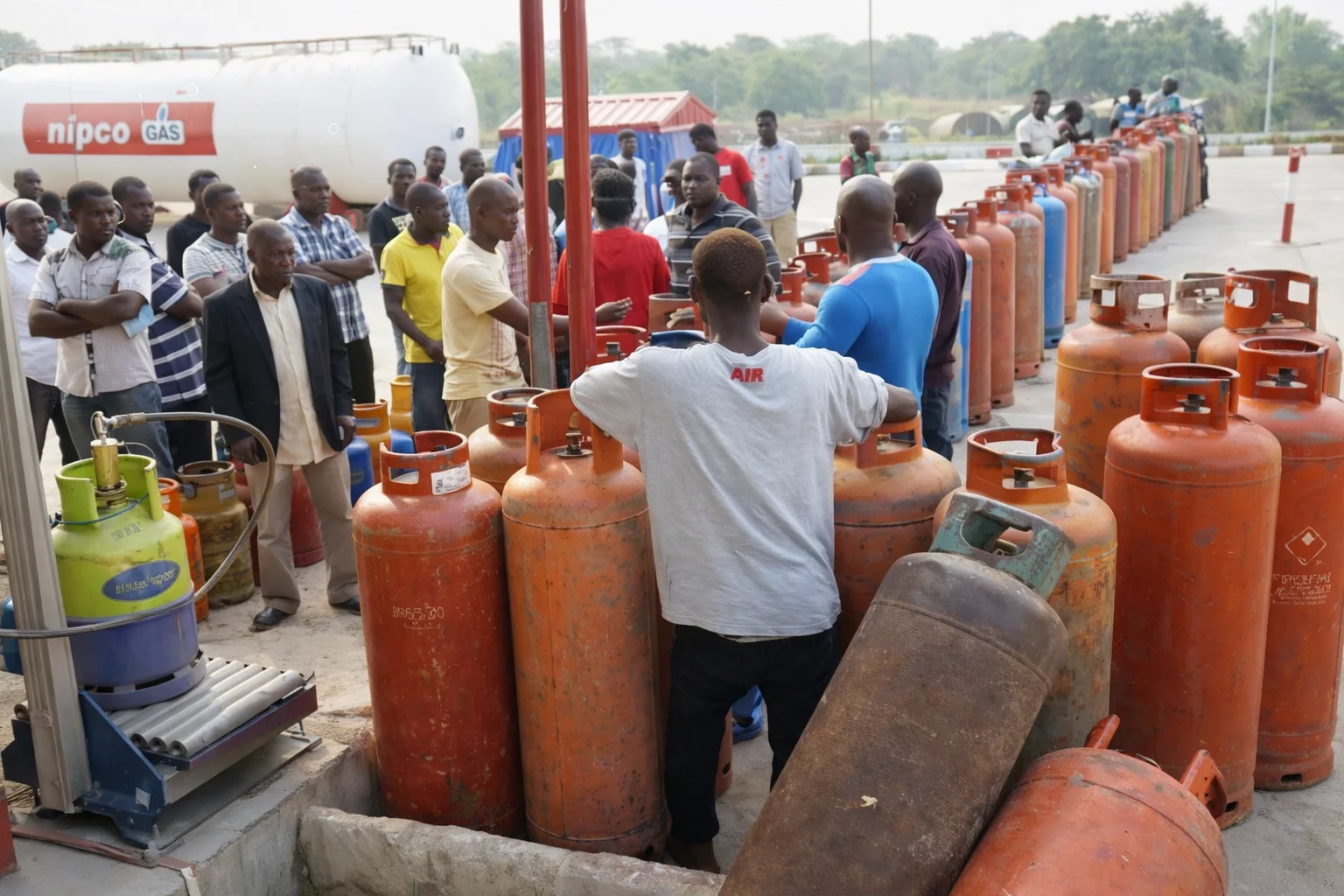
There is profit in the cooking gas business in Nigeria. Cooking gas, or Liquefied Petroleum Gas, has replaced kerosene, firewood, and charcoal across Nigeria because it is cleaner and faster.
Homes, restaurants, and hotels use it daily, keeping sales steady. Still, many residential, semi-urban, and rural areas lack enough refill outlets, leaving room for new entrants.
It does not cost too much to start. Once you get the right licences and follow safety rules, you can run a small station with simple equipment and a rented space. If your shop is in a busy area, more people will see it and buy from you.
You can make about ₦100 to ₦300 profit on each kilogram of gas. If you sell every day, that money can add up to good income each month.
Types of Cooking Gas (LPG) Businesses in Nigeria
There are three main areas to venture into: retail, distribution, and plant operations. Each does a different job and costs different amounts to start.
Retail (Point-of-Sale) Cooking Gas Business
Retailers sell gas in cylinders directly to consumers or small shops. This is the easiest way to start. They get gas in bulk from factories or distributors and sell in 3 kg, 6 kg, 12.5 kg, or 25 kg cylinders. Some deliver straight to homes, restaurants, or shops, and many now allow orders online or through apps.
Retail doesn’t require much capital, but location is very important. Some shops are independent; others are connected to big energy companies. Retail is where most people first get cooking gas.
Distribution Cooking Gas Business
Distributors move gas from factories or import terminals to retail shops or big customers. Some sell cylinders in bulk to small shops, restaurants, and local businesses, while others supply hotels, factories, or schools using tanker trucks. Some only handle logistics for big companies.
Distribution needs medium capital, depending on trucks and storage space. Big companies like NIPCO and Conoil run distribution nationwide.
Cooking Gas Plant Operations
Plant operations handle storage, filling, and sometimes making cylinders. Bottling or filling plants get gas in bulk and fill cylinders. Skid plants are smaller, suitable for growing from retail or small distribution. Large plants have big tanks and supply shops, distributors, and commercial users.
Cylinder manufacturing plants reduce import needs. Storage terminals hold gas in bulk before distribution. Plant operations require significant capital, land, storage tanks, safety certificates, and strict compliance, but can generate the highest profits.
Market Research and Feasibility
Don’t start without research. A feasibility study shows if your idea can work, potential problems, demand, and profitability. Market research identifies customers, spending, and competitor gaps. Decide on the type of business: delivery, mini or full-scale plant, or accessories.
Collect your own data from busy areas, restaurants, hotels, and homes. Study competitors to spot gaps in pricing, delivery, or service. Plan your setup carefully with safe, accessible locations, equipment, safety gear, and backup systems. Work out finances, breakeven, profits, and risks. Start small, learn, and grow.
Selecting Suitable Location
Location affects safety, customer demand, regulatory approval, costs, and profit. Choose areas with high residential populations, commercial hubs, developing estates, or underserved regions. Busy roads and transport hubs improve access and visibility.
Ensure safety and compliance: avoid schools, hospitals, churches, or mosques, maintain proper distance from buildings and utilities, and provide space for tanks, cylinder sheds, trucks, and fire safety. Avoid high-tension power lines and crowded areas. Good access for trucks, strong visibility, and studying competitors are crucial.
Business Registration and Name Reservation
Pick a business name and a backup. Reserve it on the CAC portal for ₦500. Then register the business with BN1 form, ID, address, passport photo, and pay about ₦10,000. CAC issues a Certificate of Business Name Registration and Status Report.
File annual returns and get a Tax Identification Number. For growth, consider registering as a private limited company and think about trademarking. Costs include name reservation, registration, and certified copies, paid via the CAC portal.
Estimating Startup Costs and Capital
Costs depend on business type. Retail refilling is low capital, mini plants are intermediate, large plants require serious investment.
Retail shops: ₦300,000–₦850,000 setup; cylinders ₦100,000–₦130,000 each; digital scale ₦50,000–₦70,000; rent/renovation ₦100,000+; accessories ₦35,000+.
Mini plants: 1.5-ton plant ₦5.5 million, 2.5-ton ₦8.5–₦9 million, 5-ton ₦17–₦35 million, including tanks, dispensers, pumps, installation, safety, insurance, and stock.
Working capital: 3–6 months of staff wages, utilities, transport, restocking, marketing, and admin.
Equipment and Infrastructure
Small-Scale LPG Retail / Refilling Outlet
Equipment
- Gas cylinders (3 kg, 6 kg, 12.5 kg, 50 kg)
- Manual or semi-manual filling hose
- Weighing scale (mechanical or digital)
- Basic gas pump (where applicable)
- Fire extinguishers
- Sand buckets
- Safety signage
- Basic office furniture (desk, chair, record book or POS system)
Infrastructure
- Small shop, kiosk or fenced retail space
- Well-ventilated environment
- Concrete flooring
- Secure storage area for cylinders
- Clear safety warning signs
- Basic lighting and power supply
Medium-Scale LPG Refilling Plant (5MT–10MT)
Equipment
- Bulk LPG storage tank (5–10 metric tonnes)
- LPG dispensing unit
- Industrial weighing scales
- LPG transfer pumps or compressors
- Piping system and industrial valves
- Pressure gauges
- Emergency shut-off valves
- Fire extinguishers (multiple units)
- Sprinkler system (where required)
- Generator set
- Water tank for fire safety
Infrastructure
- Standard plot of land meeting regulatory setback requirements
- Concrete tank base and protective barriers
- Administrative office building
- Cashier point
- Parking and loading space
- Perimeter fencing
- Drainage system
- Access road for delivery trucks
Large-Scale LPG Bottling / Bulk Distribution Plant (20MT+)
Equipment
- Large LPG storage tanks (20–50+ metric tonnes)
- Automated filling skid or bottling system
- Multiple filling heads
- Digital metering and calibration systems
- High-capacity transfer pumps
- Industrial compressors
- Advanced pressure regulators
- Full industrial piping network
- Leak detection systems
- Fire hydrants and sprinkler systems
Infrastructure
- Large industrial land space
- Reinforced tank foundations
- Dedicated loading bay for tanker trucks
- Administrative and control building
- Security house
- CCTV and monitoring systems
- Comprehensive fire protection system
- Fleet vehicles for distribution
- Environmental compliance installations
How and Where to Source LPG
Most gas comes from Nigeria LNG and Dangote Refinery, sold to licensed distributors. Big sellers include Nidogas, depots in Lagos and Port Harcourt, or online platforms. Ensure safe delivery and reliable supply.
Suppliers include Nidogas, Conoil CONGAS, Rainoil Gas, Matrix Energy, Anchor Gas, MT Gas LPG, Banner Energy, Alliance Gas, Chimons Gas, Techno Oil, Gas Terminalling, Timtees Nigeria, AA Rano Gas, ZIM Gas, NaijaGasOnline, ONEGAS, Ecogas Energy.
Pricing and Profit Margin
Prices are market-driven. Sellers buy from depots and add transport, handling, and markup. Lagos prices are ₦1,200–₦1,400/kg. Local refilling stations make ₦100–₦410/kg. For example, buying at ₦890 and selling at ₦1,200 yields ₦310/kg or ₦1.55 million per 5,000 kg truck.
Smaller refillers earn less per kg but more through volume. Profit rises with busy locations. Strategies include cost-plus pricing, competitive pricing, bulk discounts, and delivery services. Margins depend on supply, transport, and operating costs.
Operational Challenges
The cooking gas business in Nigeria faces a lot of challenges. Supply is unstable because local production can’t meet demand, and refinery shutdowns, exports, and strikes make deliveries unpredictable.
Infrastructure is weak—terminals have limited storage, roads are bad, traffic slows trucks, and rural areas lack filling stations and retail outlets.
Running the business is expensive. Tanks, cylinders, safety gear, and trucks are expensive, and rising fuel and transport prices squeeze profits. Prices swing a lot too, thanks to supply gaps, exports, and international markets, which scares away middle- and low-income customers. Retailers sometimes absorb costs, but repeated volatility hurts business.
Regulations also get in the way. Licensing and safety rules take time and money, and weak enforcement lets substandard cylinders circulate. Small and medium operators struggle to get loans and find trained staff for handling and safety.
Competition is fierce, but LPG adoption is still low because many prefer firewood or charcoal, can’t afford gas, or aren’t aware of its benefits.
Safety is another worry. LPG is flammable, cylinders are often poor quality, and accidents raise costs and make people hesitant to switch.
All these issues—supply, infrastructure, cost, price swings, regulation, funding, competition, and safety—are connected, making the cooking gas business in Nigeria challenging.