Article Was Last Updated August 26, 2026
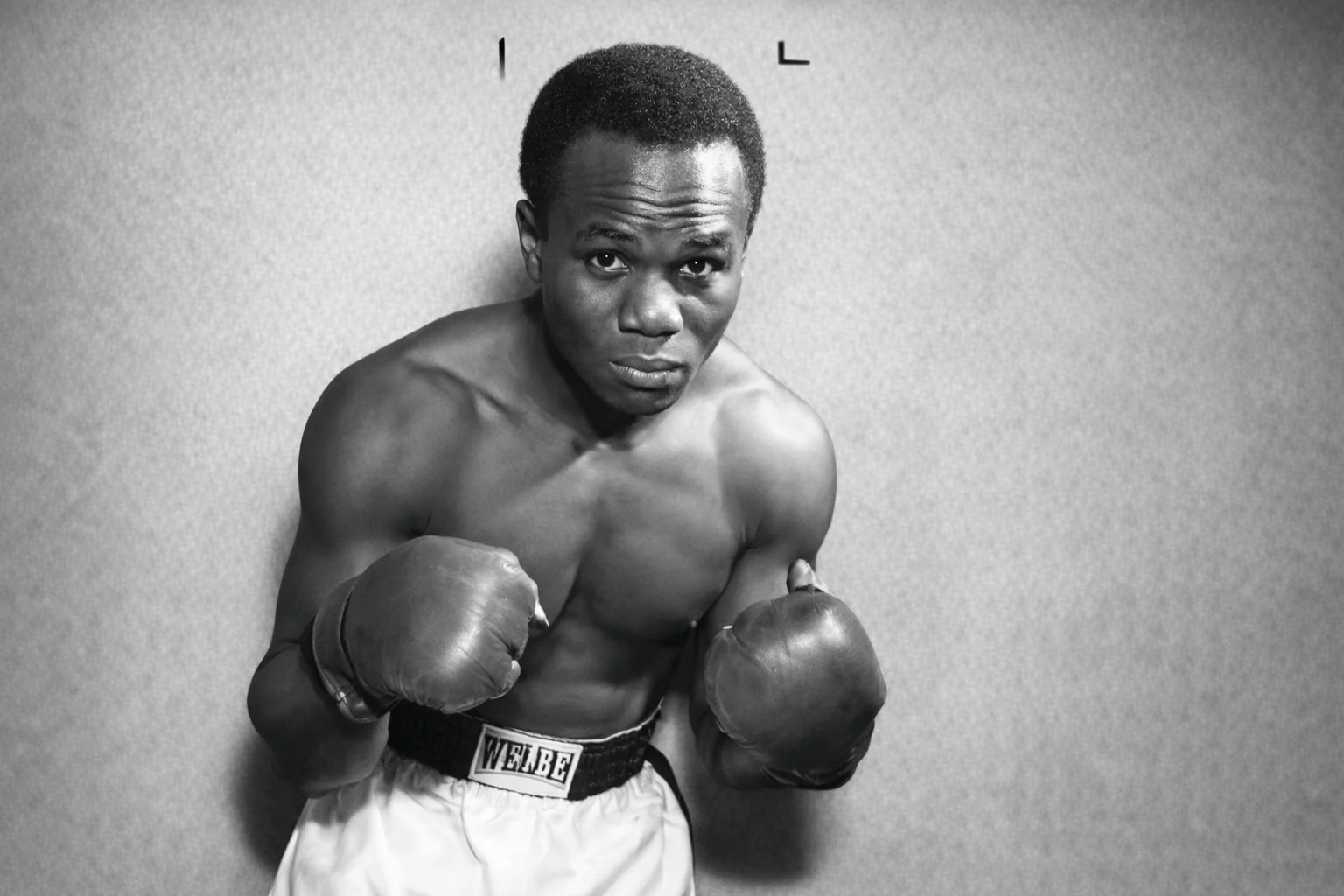
Okon Asuquo Bassey, later known as Hogan “Kid” Bassey, was born on 3 June 1932 in Creek Town, Calabar, in present-day Cross River State, southern Nigeria. He was a Christian.
He got into sports early and found boxing young. As a teenager, he used fight money to pay his school fees, moving in and out of school along the way.
By around age 18, he was already making headlines. Still a student, he became the youngest boxer to win a national title in Nigeria after claiming the national flyweight crown.
He turned professional in Nigeria and took the name Kid Bassey. In the early 1950s, he moved to Liverpool, England, to chase bigger fights and international exposure.
His defining moment came in June 1957 in Paris. He defeated Cherif Hamia to win the World Featherweight Title, becoming the first Nigerian-born world boxing champion.
In 1958, he was awarded the Member of the Order of the British Empire for his contribution to sport. Nigeria later honoured him with the Order of the Niger for his impact on boxing.
Hogan “Kid” Bassey is remembered as one who helped place Nigerian boxing on the world stage.
Early Life and Parents
Hogan Bassey was one of at least five children. His father is Chief Okon Bassey Asuquo, a fisherman by trade.
His mother is usually referred to as Mrs Okon Bassey Asuquo. Her first name is mentioned as Ekpo Etim Bassey, who was known locally as a trader in Calabar.
Details about his brothers and sisters, including their names, are not known.
Academic and Educational Background
Hogan Bassey kicked off his schooling at Creek Town School from 1941 to 1943. A few years later, he picked up where he left off at Ahmadiyya Primary School in Lagos, finishing around 1950.
School wasn’t easy for him. Money problems made him drop out multiple times—some say seven—but he kept coming back, funding his fees with early boxing winnings. Even as a student, his talent was clear. By 1949, he’d already won the Nigerian national flyweight title.
There’s no record of him finishing secondary school or going to university. Instead, he shifted fully into boxing. His parents wanted him to focus on school, but his ring success won their support. By 1951, he was off to the UK to fight professionally, ending his formal education for good.
So basically, School and boxing were always linked for Bassey—one paying for the other until the ring took over.
Boxing Career Profile
Hogan “Kid” Bassey started boxing as a teen and won the Nigerian flyweight title at just 18. He didn’t stop there; he also captured the Nigerian bantamweight and West African titles while fighting across Lagos and West Africa.
After 14 fights at home, he moved to Liverpool in late 1951, just before Christmas. He got his British boxing licence and worked his way up through the European scene, moving from flyweight to featherweight under managers like Peter Banasko, George Biddles, and Jimmy August.
In 1955, he won the British Empire featherweight title by beating Billy “Spider” Kelly in Belfast. Two years later, he made history in Paris by knocking out Cherif Hamia in the tenth round to become the world featherweight champion—the first Nigerian to ever win a world boxing title. Along the way, he beat big names like Ricardo Moreno and Hall-of-Famer Willie Pep.
His reign ended on 18 March 1959 when he lost the title to Davey Moore in Los Angeles, and a rematch later that year didn’t go his way either. Bassey retired after 74 fights, with 59 wins, 21 by knockout, 13 losses, and 2 draws.
After hanging up his gloves, he stayed in the sport as a coach and Nigeria’s Director of Physical Education. He was honoured with an MBE in 1958 and Nigeria’s Order of the Niger in 1973. Hogan Bassey remains a legend, remembered as Nigeria’s first world boxing champion.
Boxing Titles
Hogan Bassey didn’t just win titles—he owned them. At 126 pounds, he took the NYSAC and NBA (WBA) featherweight crowns, then earned The Ring magazine’s seal as featherweight champ, proof that both fans and critics recognised him.
But his rise started closer to home. From Nigeria’s flyweight belt at 112 pounds to bantamweight supremacy at 118, he ruled nationally and across West Africa. He didn’t stop there—claiming the Commonwealth featherweight title showed he could dominate beyond his continent.
And then he hit the ultimate high: undisputed featherweight champion. Every major belt in the division, all in his corner—a mark of a fighter who didn’t just compete, he conquered.
Marriages and Children
Hogan “Kid” Bassey’s love life had its twists and turns as he had been married twice. In the mid‑1950s, he tied the knot with his first wife, Maria Williams, a Liverpool woman who might have had Sierra Leonean roots. They had two kids together, but eventually, the marriage didn’t last and ended in divorce.
Fast forward to 1977, and Bassey found love again and married a second wife, Mary Magdalene, an Efik woman from Cross River. They stayed together until he died in 1998 and raised six children.
In all, Bassey fathered at least eight kids, though some reckon the number could be closer to ten. One of them, Frankie Hogan‑Bassey, remembers him as protective, disciplined, and full of love.
Net Worth Details
Bassey’s wealth was from his boxing career. Championship bouts and international fights in Europe and the United States brought in substantial earnings for the time, with purses and gate receipts far exceeding what he could have earned in Nigeria. Exact figures are unknown, but he was among the best‑paid boxers of his era.
After retiring in the late 1950s, Bassey became a coach and sports official in Nigeria, helping train national squads and mentor young fighters. He was honoured with the Member of the Order of the British Empire and Nigeria’s Order of the Niger, recognitions of his influence rather than income.
Bassey didn’t build a business empire or earn wealth outside boxing and coaching. His fortune was rooted in the ring and in the respect he earned.
Cause and Circumstances of Death
Hogan Bassey passed away on 26 January 1998. He was 65. He died at his home in Apapa, Lagos, Nigeria. What exactly caused his death isn’t really known. Reports describe his death as peaceful and natural, nothing sudden or violent. No medical reason was given, just that it happened at home and fit with his age and health at the time.